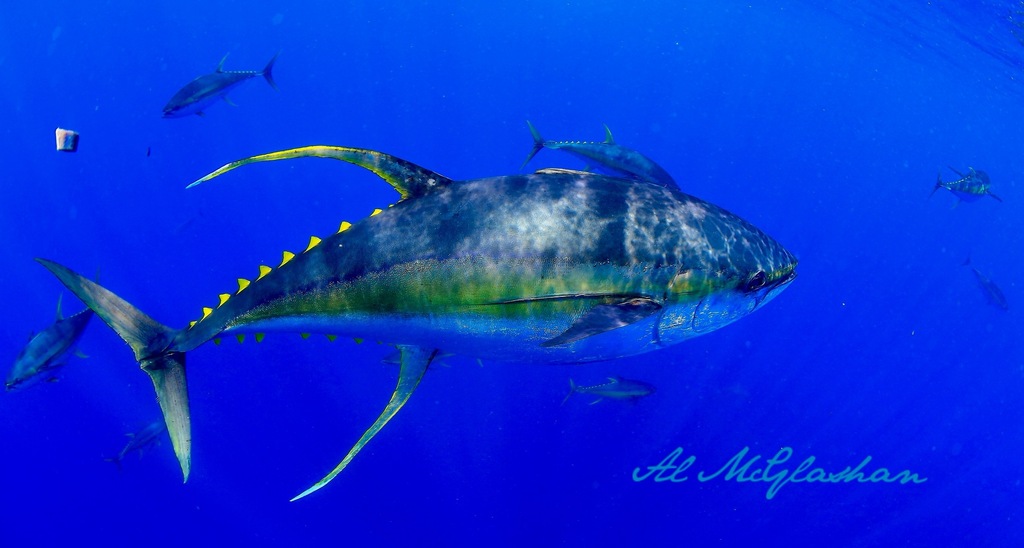
Yellowfin Tuna in Mauritius: The Ocean's Golden Speedster
The yellowfin tuna (Thunnus albacares) — known locally as thon à nageoires jaunes — is one of the most exhilarating large pelagic fish to encounter in the warm waters surrounding Mauritius. Growing up to 2.4 metres in length and weighing as much as 200 kilograms, these muscular, hydrodynamic predators are built for speed and endurance, capable of bursting through the water at over 75 km/h. Their brilliant yellow dorsal and anal fins, accented by a vivid yellow lateral stripe, make them unmistakable even at depth.
Behaviour and Ecology
Yellowfin tuna are highly migratory, roaming vast stretches of the Indian Ocean in search of prey. Around Mauritius, they are typically encountered near the outer reef edges, seamounts, and open-water drop-offs where upwellings concentrate baitfish such as flying fish, anchovies, and squid. They are social hunters, often travelling in large schools that can number in the hundreds, and are known to associate with dolphins and whale sharks — making aggregation events truly spectacular multi-species encounters.
These tuna are warm-blooded, able to regulate their body temperature above that of the surrounding ocean, which gives them a physiological edge when hunting in deeper, cooler water. Their large eyes are adapted to low-light conditions, allowing them to dive to depths of over 1,000 metres in pursuit of prey. Near the surface, their feeding behaviour is explosive — crashing into bait balls and creating dramatic surface eruptions that attract seabirds and other predators alike.
Where to See Yellowfin Tuna in Mauritius
The best chances of encountering yellowfin tuna in Mauritius are on the outer reef walls and pelagic zones off the west and south coasts of the island. The deep blue water beyond the lagoon fringe is their preferred habitat, particularly around underwater seamounts and channels where currents funnel nutrients. Live-aboard excursions and blue-water drift dives organised by local dive centres significantly improve your odds of an encounter.
Fishing and dive operators around Black River (Rivière Noire) and Le Morne are the traditional hubs for yellowfin encounters, as the waters here drop sharply into the open Indian Ocean. The Albion Fishing Banks and the deep channels off the southwest coast are particularly productive. Snorkellers and free divers can also spot them from the surface during peak feeding activity in the early morning hours.
Conservation and Fishing Pressure
Yellowfin tuna are classified as Near Threatened on the IUCN Red List, reflecting the global pressure placed on this species by commercial longline and purse-seine fisheries in the Indian Ocean. Mauritius participates in regional management through the Indian Ocean Tuna Commission (IOTC), which sets catch limits and monitors stock health. Recreational big-game fishing for yellowfin is a significant tourism draw in Mauritius, particularly from November to April, and is generally conducted under a catch-and-release ethos by responsible operators.
For divers and snorkellers, interactions with yellowfin tuna are entirely passive — these fish are fast-moving and rarely linger, but their power and presence leave a lasting impression. Supporting eco-conscious dive and fishing operators helps ensure that yellowfin tuna populations remain healthy for future generations to admire both above and below the waterline.
Tips for Diving with Yellowfin Tuna
- Go early: Dawn and dusk are peak feeding times when tuna are most active near the surface.
- Look for birds: Frigate birds and boobies circling above the water are a reliable sign of a tuna feeding frenzy below.
- Drift dive the outer reef: Strong currents concentrate baitfish and attract pelagic hunters like yellowfin.
- Stay calm and still: Quick movements will spook approaching fish — let them come to you.
- Book pelagic trips: Specialist blue-water dive charters offer the highest chance of extended encounters.