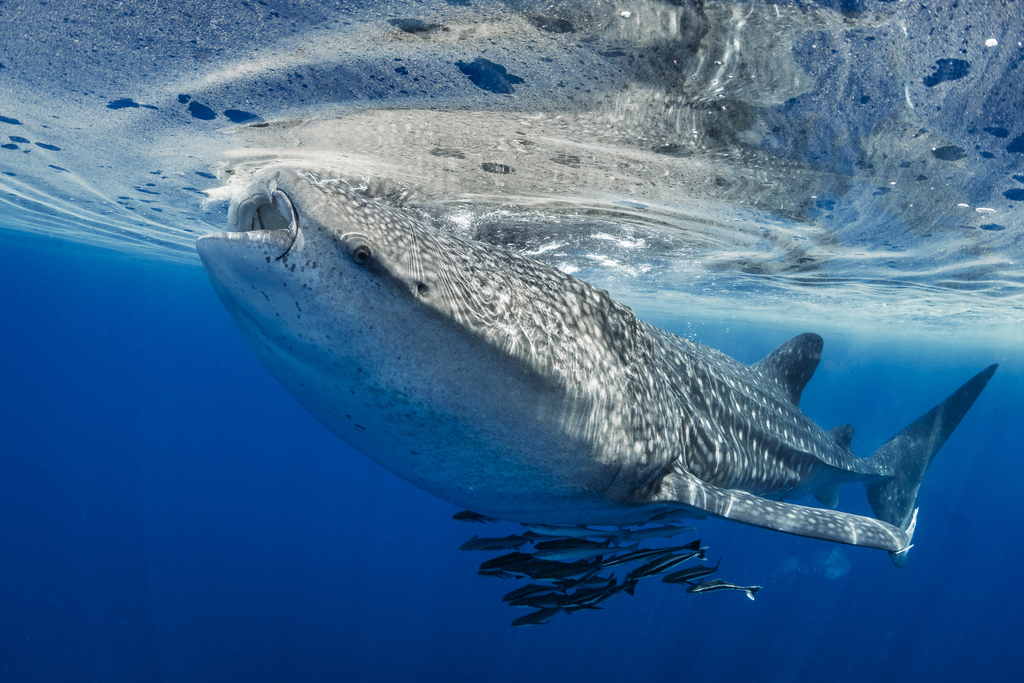
Whale Shark in Mauritius — Rhincodon typus
The whale shark (Rhincodon typus), known locally as Requin baleine, is the largest fish on Earth and arguably the most awe-inspiring creature you can encounter in the waters surrounding Mauritius. Despite its intimidating size — adults commonly measure between 6 and 12 metres, with some individuals exceeding 18 metres — the whale shark is a docile plankton feeder, making close encounters a truly magical and safe experience for divers and snorkellers alike.
Identifying the Whale Shark
Whale sharks are unmistakable in the water. Their broad, flattened heads and enormous mouths — which can span up to 1.5 metres wide — are unique among sharks. The body is dark grey to blue-grey on the dorsal side, adorned with a stunning pattern of white or pale yellow spots and stripes arranged in a distinctive checkerboard pattern. The belly is white or cream. These markings are as unique as a human fingerprint and are used by researchers worldwide through photo-identification databases to track individual animals. Three prominent ridges run along each side of the body, and the tail fin is asymmetrical, with the upper lobe significantly larger than the lower.
Behaviour and Feeding
Whale sharks are filter feeders, consuming enormous quantities of tiny organisms including zooplankton, fish eggs, krill and small fish. They feed by swimming slowly with their wide mouths open at the surface or at depth, filtering hundreds of litres of water per hour. In Mauritius, sightings often occur when aggregations of plankton bloom near the surface, drawing these giants close to shore. Encounters typically involve a solitary individual cruising slowly near the surface, sometimes accompanied by a retinue of remora fish and juvenile golden trevally. Whale sharks are generally indifferent to human presence, though responsible encounter guidelines should always be respected — maintaining a minimum distance of 3 metres and never touching or riding the animal.
Where to See Whale Sharks in Mauritius
Whale shark sightings in Mauritius are most frequently reported off the southwestern and western coastlines, where ocean currents concentrate nutrients and plankton. The area around Le Morne Peninsula and the outer reefs near Tamarin Bay are hotspots, and sightings have also been recorded along the northern coast near Coin de Mire. Local fishermen and dive operators often share real-time sighting information, and several operators run dedicated whale shark snorkelling excursions during peak season. Because these are open-ocean encounters, sightings cannot be guaranteed, but an experienced local guide dramatically increases your chances.
Conservation Status and Threats
The whale shark is classified as Endangered on the IUCN Red List, having suffered significant population declines due to targeted fishing, bycatch, vessel strikes and the illegal fin trade across parts of Asia. In Mauritius, whale sharks are fully protected under national fisheries legislation, and it is illegal to harm, capture or harass them. Responsible wildlife tourism plays a critical role in their conservation — every respectful encounter generates economic value that incentivises protection. Visitors are strongly encouraged to report sightings to local marine conservation organisations and to submit underwater photographs to global databases such as Wildbook for Whale Sharks, contributing to vital scientific research.
Tips for Your Whale Shark Encounter
- Book with a reputable operator who follows established whale shark encounter codes of conduct.
- Wear a wetsuit and fins for extended surface snorkelling sessions.
- Avoid flash photography, as it can startle the animal.
- Stay calm, move slowly and let the whale shark dictate the pace of the encounter.
- Combine your trip with early morning departures when sea conditions are typically calmer and surface visibility is best.
Whether you are an experienced diver or a first-time snorkeller, an encounter with a whale shark in Mauritius is a profound reminder of the ocean's extraordinary biodiversity — and of our collective responsibility to protect it.