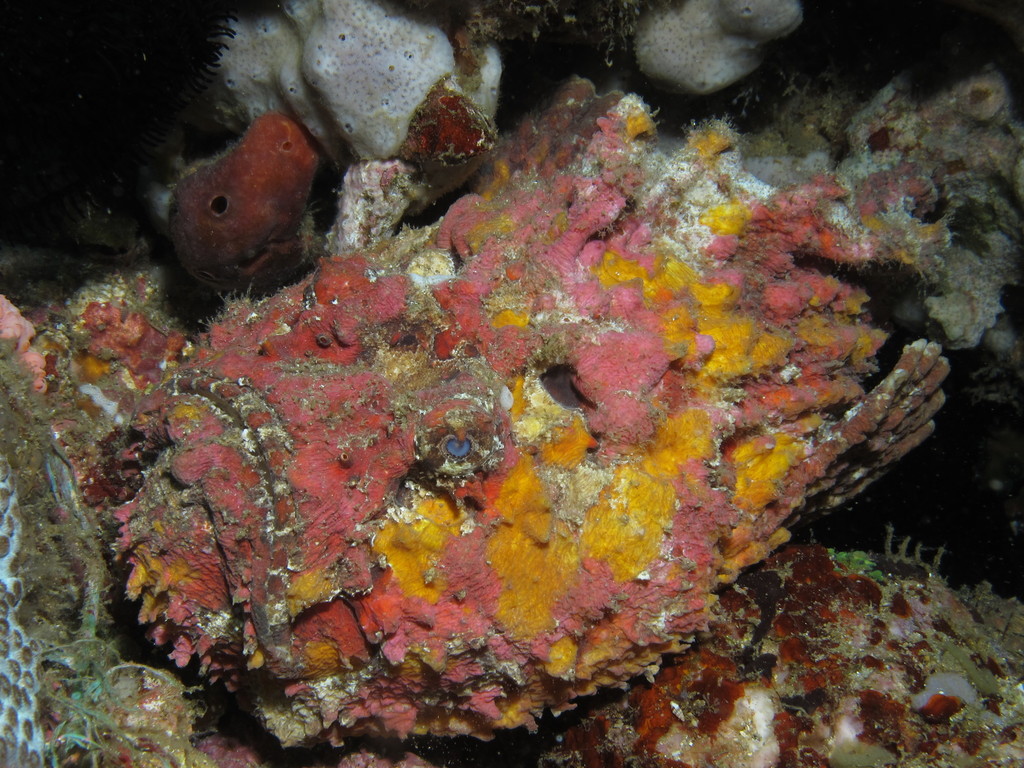
Stonefish in Mauritius: The World's Most Venomous Fish
The stonefish (Synanceia verrucosa), known locally as Poisson pierre, is one of the most fascinating and feared inhabitants of Mauritius's coral reef ecosystems. Despite its lethal reputation, this remarkable ambush predator is a vital part of the marine food chain and a highly sought-after sighting for divers and underwater naturalists who know where — and how — to look.
Identification and Appearance
Growing up to 40 cm in length, the stonefish is stocky and warty in texture, with mottled browns, greys, greens, and reds that mimic the encrusted rocks and dead coral of its surroundings with near-perfect fidelity. Its skin is covered in fleshy appendages and algae-like growths that enhance the camouflage further. The most dangerous feature is its 13 dorsal spines, each connected to a venom gland capable of delivering excruciating and potentially fatal stings if stepped on or handled. The eyes sit high on the head and are difficult to spot, while the upturned mouth gives the fish a perpetually grumpy expression — its only giveaway when studied closely.
Behaviour and Hunting Strategy
The stonefish is the quintessential sit-and-wait predator. Rather than actively pursuing prey, it settles motionlessly on the seabed, often partially buried in sand or wedged among rocks, and waits for small fish and crustaceans to swim within striking distance. When prey comes close enough, it lunges with lightning speed — one of the fastest predatory strikes in the animal kingdom, completed in as little as 15 milliseconds. This extreme stillness is why the stonefish poses such a risk to unwary reef walkers and shallow-water waders in Mauritius.
Venom and Medical Importance
The stonefish's venom, a complex cocktail of proteins including verrucotoxin, causes immediate and intense pain, swelling, tissue necrosis, and in severe untreated cases, cardiac complications. If stung, the first aid response is to immerse the affected area in hot water (as hot as tolerable, around 45°C), which helps break down the protein-based venom, and to seek medical attention immediately. Mauritius hospitals and dive operators are well equipped to handle stonefish incidents, and antivenom is available on the island. Fortunately, fatalities are extremely rare when treatment is prompt.
Habitat in Mauritius
In Mauritius, stonefish are common across the lagoon and outer reef systems, particularly in shallow rocky areas, seagrass beds, and among coral rubble at depths ranging from just 30 cm to over 30 metres. They are equally at home in the calm lagoon areas of Blue Bay Marine Park, along the western reefs near Flic en Flac, and in the rocky shallows of the north coast. Their preference for shallow, accessible environments makes them potentially dangerous to those walking on reef flats or wading in rocky shallows without reef shoes.
Tips for Safe Observation
- Never touch any encrusted rock or coral that you haven't positively identified.
- Always wear reef-safe footwear when wading in rocky shallows or lagoon areas.
- Look carefully for the telltale upturned mouth and elevated eyes when scanning the seabed.
- Maintain a respectful distance — stonefish do not attack divers, they only sting when touched or stepped on.
- Dive with a knowledgeable local guide who can point out stonefish safely and enhance your chances of a controlled encounter.
Ecological Role
As an apex ambush predator in the reef ecosystem, the stonefish plays an important role in regulating populations of small reef fish and invertebrates. Its presence is an indicator of a healthy, structurally complex reef environment. Despite their fearsome reputation, stonefish are not aggressive and pose no threat to divers who observe sensible underwater etiquette.
Spotting a stonefish in Mauritius is a genuine highlight of any reef dive — a heart-stopping moment of recognition when what appeared to be an unremarkable rock reveals a living, breathing marvel of evolutionary adaptation.