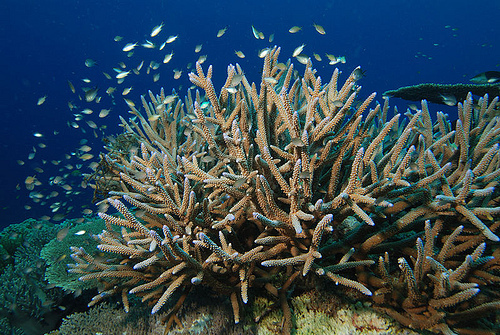
Staghorn Coral in Mauritius: The Reef's Master Architect
Among the many wonders that lie beneath the turquoise waters of Mauritius, few are as immediately recognisable or ecologically important as staghorn coral (Acropora spp.). Named for its striking resemblance to the antlers of a stag, this branching coral genus is found across the island's lagoons, reef crests, and outer slopes, providing essential habitat for an extraordinary diversity of marine life.
Identification and Appearance
Acropora corals are characterised by their distinctive branching growth forms, which can range from tight, bushy clusters to sweeping table-like structures and elegant upward-reaching columns. Colony colours vary widely — from pale cream and golden yellow to vivid purple, blue, and green — often depending on the depth, light exposure, and water clarity of their environment. Individual polyps are tiny but visible as small pores along each branch, extending delicate tentacles at night to feed on microscopic plankton. In Mauritius, some of the most commonly encountered species include Acropora muricata, Acropora formosa, and Acropora hyacinthus, the latter forming impressive table formations that can exceed a metre in diameter.
Ecological Role
Staghorn corals are among the most important reef-building organisms in the Indo-Pacific, and Mauritius is no exception. Their complex three-dimensional architecture creates microhabitats for juvenile fish, crustaceans, nudibranchs, and countless invertebrates. Species such as the humbug damselfish, coral grouper, and various wrasses depend on Acropora thickets for shelter and breeding grounds. The rapid growth rate of staghorn coral — up to 10–20 cm per year under ideal conditions — also means these corals are capable of relatively quick recovery after disturbance, making them key indicators of reef resilience.
Where to Find Staghorn Coral in Mauritius
Staghorn coral colonies are common throughout Mauritius, found in both shallow lagoon environments and along deeper outer reef slopes. The island's fringing reef system, which encircles much of the coastline, provides ideal substrate for Acropora growth. Snorkellers can often spot healthy colonies in just 1–3 metres of water, particularly on the western and northern coasts where water conditions are calmer. Divers exploring depths of 5–20 metres will encounter more mature and structurally complex formations, especially around the renowned dive sites off the south-west and north-east of the island.
Threats and Conservation
Despite their resilience, staghorn corals face significant threats worldwide, and Mauritius is not immune to these pressures. Ocean warming is the most acute danger — elevated sea temperatures trigger coral bleaching, a stress response in which corals expel their symbiotic algae (zooxanthellae) and turn white. Prolonged bleaching leads to coral death, and mass bleaching events linked to El Niño conditions have previously impacted Mauritian reefs. Additional threats include ocean acidification, physical damage from anchoring, and runoff from coastal development. The Mauritian government, alongside NGOs such as the Reef Conservation Mauritius, has implemented coral restoration programmes including Acropora fragmentation and nursery cultivation, giving hope for the future of these vital ecosystems.
Tips for Responsible Coral Watching
- Never touch or stand on coral — even brief contact can damage delicate polyps that have taken years to grow.
- Maintain good buoyancy control when diving near coral formations to avoid accidental contact.
- Choose dive operators committed to sustainable practices and who brief divers on reef etiquette.
- Avoid using chemical sunscreens that contain oxybenzone and octinoxate, which are toxic to corals — opt for reef-safe mineral alternatives.
- Report any signs of bleaching or damage to local marine conservation authorities.
A Living Legacy
Staghorn coral is more than just a beautiful backdrop for underwater photography — it is the backbone of Mauritius's marine biodiversity. Every thriving branch represents years of slow, patient growth and the collective effort of countless tiny polyps working in harmony. By diving responsibly and supporting local conservation initiatives, visitors to Mauritius can help ensure that these magnificent structures continue to flourish for generations to come.