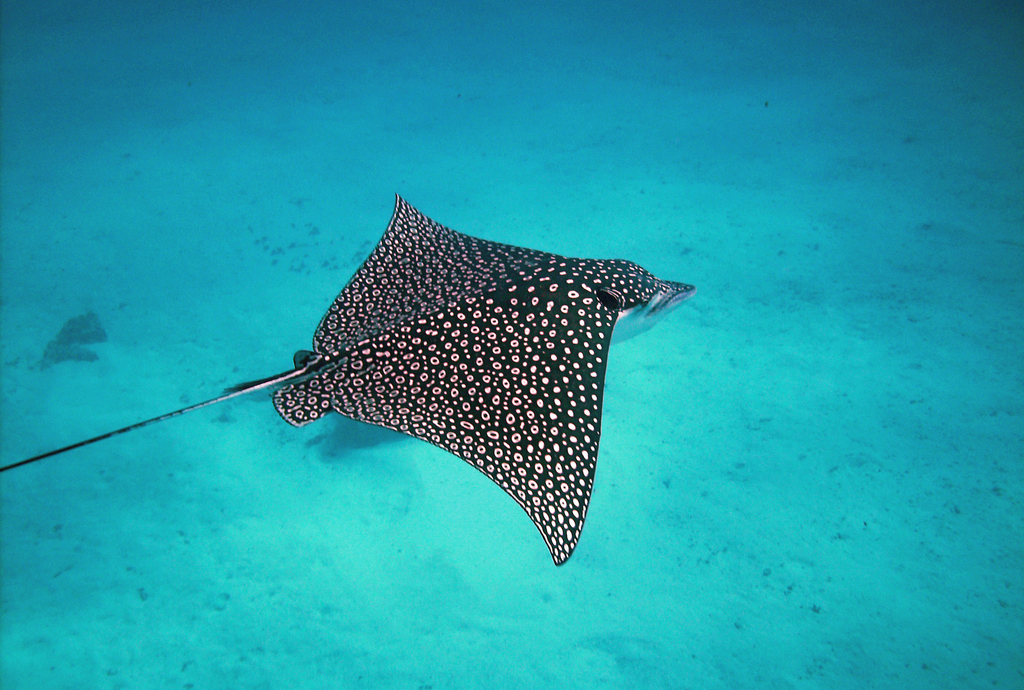
Spotted Eagle Ray in Mauritius — A Complete Guide
The spotted eagle ray (Aetobatus narinari), known locally as Raie aigle tachetée, is one of the most visually stunning rays found in the warm tropical waters surrounding Mauritius. Instantly recognisable by its jet-black dorsal surface adorned with brilliant white spots and rings, its duck-like snout, and long whip-like tail, this species commands awe from beginner snorkellers and experienced divers alike. Adults typically reach a wingspan of 1.5 to 3 metres and can weigh up to 230 kilograms, making them a genuinely impressive presence underwater.
Behaviour and Biology
Spotted eagle rays are powerful, graceful swimmers that appear to 'fly' through the water column using their large pectoral fins in slow, deliberate wing-beats. Unlike bottom-dwelling rays, they are highly active and pelagic, frequently observed cruising mid-water or patrolling just above sandy seabeds in search of prey. Their diet consists primarily of bivalves, gastropods, shrimps, and small fish, which they excavate from sandy substrates using their distinctive flattened snout. Around Mauritius, it is common to observe them in small groups of two to six individuals, particularly during the warmer months when water temperatures peak.
Spotted eagle rays are ovoviviparous, meaning embryos develop inside the mother before live birth. Litters typically consist of two to four pups. Like all eagle rays, they possess one to five venomous tail spines at the base of their whip-like tail — a defensive adaptation that poses little risk to respectful, non-intrusive divers.
Where to See Spotted Eagle Rays in Mauritius
Mauritius offers numerous world-class sites where spotted eagle rays are reliably encountered. The island's lagoons, outer reef walls, and passages between islets create the ideal habitat for these roving rays. Blue Bay Marine Park in the south is arguably the most famous location, where rays are frequently spotted gliding over seagrass beds and sandy flats in shallow, clear water. The Passe Saint-Jacques channel is another hotspot, particularly early in the morning when currents bring nutrient-rich water through the passage.
On the west coast, the calm, protected waters off Flic en Flac and the celebrated dive site Rempart Serpent regularly host spotted eagle rays patrolling the reef edges. The Cathedral dive site near Flic en Flac, with its dramatic underwater caverns and drop-offs, also provides excellent sightings. In the north, the waters around Coin de Mire (Gunner's Quoin) island offer thrilling encounters as rays travel between open ocean and the reef system. The Passe de la Belle Mare on the east coast is equally productive during incoming tides.
Best Season to See Spotted Eagle Rays
While spotted eagle rays can be encountered year-round in Mauritius thanks to the island's tropical climate, sightings are most frequent and reliable between October and May — the austral summer and early autumn. During these warmer months, sea surface temperatures rise to 26–29°C, and the rays are more active, often gathering in larger groups. Visibility is generally excellent on the leeward western and northern coasts throughout summer. The cooler winter months (June–September) bring stronger southeast trade winds that can affect conditions on the east coast, though western sites remain very diveable and ray sightings continue.
Conservation Status and Responsible Diving
The spotted eagle ray is classified as Vulnerable on the IUCN Red List, facing threats from targeted fishing, bycatch in gillnets, and habitat degradation across its global range. In Mauritius, the species benefits from protected marine areas such as Blue Bay Marine Park. Divers are encouraged to maintain a respectful distance of at least two metres, avoid touching or chasing rays, and never block their natural swimming path. Responsible dive operators in Mauritius adhere to these guidelines, ensuring that the spotted eagle ray continues to thrive in local waters for future generations to admire.