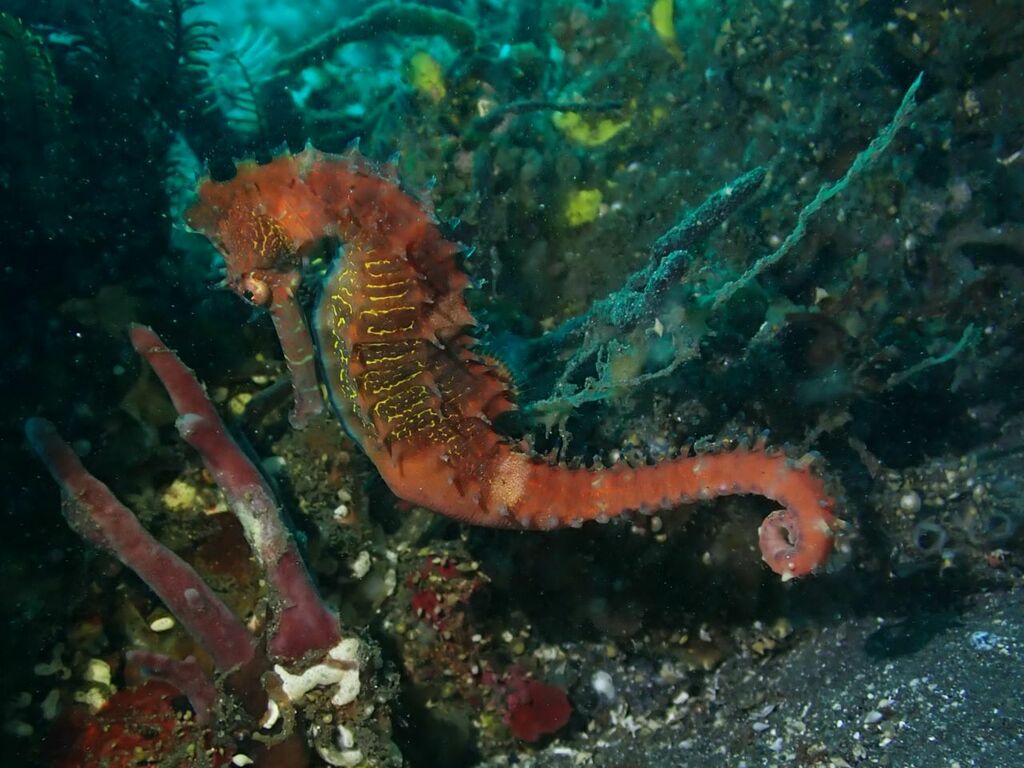
Thorny Seahorse in Mauritius – Hippocampus histrix
The thorny seahorse (Hippocampus histrix), known in French as the hippocampe épineux, is one of the ocean's most extraordinary yet seldom-seen creatures. Classified as a rare species in Mauritian waters, encountering one during a dive is a genuine privilege that speaks to the exceptional biodiversity of the island's coral reef ecosystems.
Identification and Physical Characteristics
True to its name, the thorny seahorse is adorned with prominent, sharp spines — called cirri — that protrude from its bony body plates, giving it a remarkably rugged and almost prehistoric appearance. Adults typically measure between 10 and 17 centimetres in length, making them mid-sized among seahorse species. Their colouration is highly variable, ranging from pale yellows and creamy whites to mottled browns and oranges, always perfectly tuned to their immediate surroundings. Their elongated snout is used to suck in tiny crustaceans and zooplankton with a rapid, precise strike. Like all seahorses, it is the male that carries and births the young, nurturing the fertilised eggs in a specialised brood pouch on his abdomen.
Habitat and Behaviour in Mauritius
In Mauritius, the thorny seahorse inhabits shallow to mid-depth coral reef systems, typically found between 5 and 30 metres. It shows a strong preference for areas rich in gorgonian sea fans, feathery black corals, and dense soft coral colonies, where its spiny body texture provides near-perfect camouflage. Seahorses are notoriously sedentary animals; they anchor themselves with their prehensile tails to coral branches and sea grasses, drifting very little from their chosen patch of reef. This sedentary lifestyle, while an effective survival strategy, makes them particularly vulnerable to habitat degradation and collection.
Divers who spot a thorny seahorse in Mauritius often do so by moving slowly and scanning sea fans meticulously. Their cryptic colouration means they can be just centimetres away without being detected. The species is largely solitary outside of mating, though pairs may be seen together during courtship, which involves an elaborate and graceful dance where both partners mirror each other's movements.
Diet and Feeding
The thorny seahorse is an ambush predator, feeding primarily on tiny shrimps, copepods, and other small crustaceans. Despite their slow, unhurried appearance, seahorses are remarkably effective hunters — their specialised jaw can create powerful suction, allowing them to strike prey with one of the fastest feeding movements in the animal kingdom.
Conservation Status and Threats
Hippocampus histrix is listed as Vulnerable on the IUCN Red List. Globally, the species faces pressure from habitat destruction, particularly the degradation of coral reefs and seagrass beds, as well as targeted collection for the traditional medicine trade and the curio and aquarium industries. In Mauritius, while direct collection is less prevalent, the species' rarity underscores the importance of reef conservation efforts across the island. Mauritius's marine protected areas and responsible dive tourism play a critical role in safeguarding the fragile habitats that this species depends on.
Tips for Divers
- Move slowly and scan sea fans at close range — thorny seahorses are masters of disguise.
- Dive with an experienced local dive guide who knows specific sighting locations.
- Avoid touching or disturbing seahorses, as stress can significantly harm them.
- Buoyancy control is essential — hovering motionlessly increases your chances of a prolonged sighting.
- Early morning dives can be productive as seahorses may be slightly more active.
Encountering a thorny seahorse in Mauritius is a testament to the island's remarkable marine heritage. Every sighting is a reminder of why protecting these delicate reef ecosystems matters so profoundly.