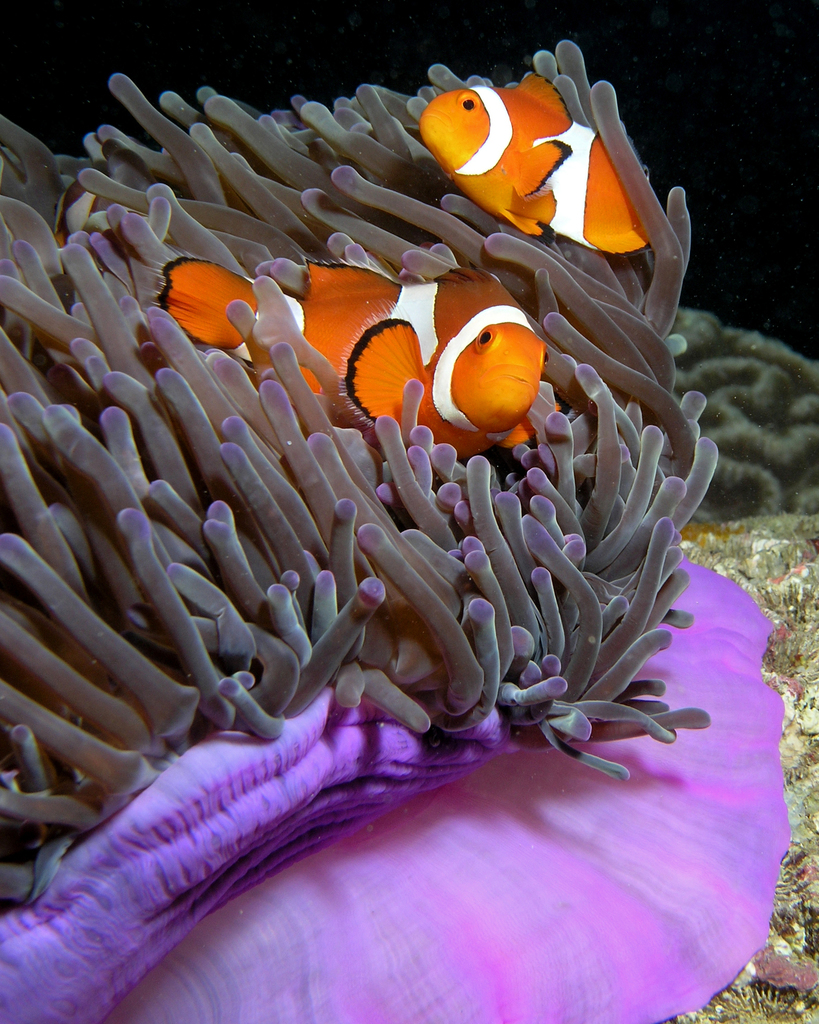
Magnificent Sea Anemone in Mauritius — Heteractis magnifica
The magnificent sea anemone (Heteractis magnifica), known in French as the Anémone magnifique, is one of the most visually striking invertebrates found on the coral reefs of Mauritius. Belonging to the family Stichodactylidae, this large anemone is a cornerstone species of Indo-Pacific reef ecosystems, and Mauritius offers some of the most accessible and rewarding opportunities to observe it in the wild.
Identification and Appearance
Heteractis magnifica is one of the largest sea anemones in the world, with oral discs that can reach up to one metre in diameter. The tentacles are long, tapering, and typically uniform in colour — ranging from white and cream to vivid shades of purple, green, brown, and electric blue. The column (the stalk-like body) is often a contrasting colour to the tentacles and is usually visible as the anemone clings firmly to rocky substrate or coral rubble. Unlike some anemone species, H. magnifica prefers to position itself in well-lit, shallow to mid-depth reef zones, typically between 1 and 20 metres, where sunlight fuels its symbiotic zooxanthellae algae.
Behaviour and Symbiosis
What makes the magnificent sea anemone truly spectacular is its role as a host for anemonefish — commonly known as clownfish. In Mauritius, the species most frequently seen sheltering within the tentacles of H. magnifica is the Clark's anemonefish (Amphiprion clarkii). These bold, orange-and-white fish dart in and out of the stinging tentacles, protected by a special mucus coating that prevents them from being harmed. In return, the clownfish defend the anemone from predatory butterflyfish and help improve water circulation around it.
The anemone itself is carnivorous, using its nematocyst-laden tentacles to capture zooplankton and small fish that drift too close. It also benefits from nutrients produced by its resident zooxanthellae, making it a highly efficient organism in nutrient-poor reef environments. When disturbed, H. magnifica can rapidly contract its column and tentacles, retreating to a much smaller form — a behaviour that reminds observers of its surprisingly dynamic nature.
Where to Find It in Mauritius
Mauritius is blessed with a fringing reef system that encircles much of the island, creating protected lagoons and dramatic outer reef drop-offs that are prime habitat for the magnificent sea anemone. The species is classified as common in Mauritian waters, and divers frequently encounter multiple individuals on a single dive. They are particularly abundant on shallow reef plateaus and lagoon edges, where water clarity and sunlight penetration are optimal.
Popular dive sites around the island consistently deliver sightings, with anemones often serving as natural focal points where guides lead divers for macro photography and fish observation. The north and west coasts of Mauritius tend to offer the calmest conditions and clearest visibility, making them particularly rewarding for observing this species.
Conservation and Responsible Diving
While the magnificent sea anemone is currently listed as a species of Least Concern by the IUCN, it remains vulnerable to the pressures of reef degradation, rising sea temperatures, and coral bleaching events. As a photosynthetic organism, it is sensitive to water temperature anomalies that can cause it to expel its zooxanthellae — a bleaching process similar to that seen in hard corals. Responsible divers should always maintain good buoyancy control, avoid touching or disturbing anemones, and never attempt to touch or handle resident clownfish. Even the oils from human skin can disrupt the delicate mucus layer of both the anemone and its symbiotic partners.
Supporting locally run, eco-conscious dive operators in Mauritius is one of the best ways to contribute to reef conservation while enjoying these extraordinary creatures up close.
Photography Tips
The magnificent sea anemone is a favourite subject for underwater photographers. For the best results, approach slowly and settle at eye-level with the anemone. A wide-angle lens works beautifully to capture the full spread of tentacles alongside clownfish, while a macro lens reveals the extraordinary texture and colour detail of individual tentacles. Early morning dives often offer the clearest water and most active clownfish behaviour.