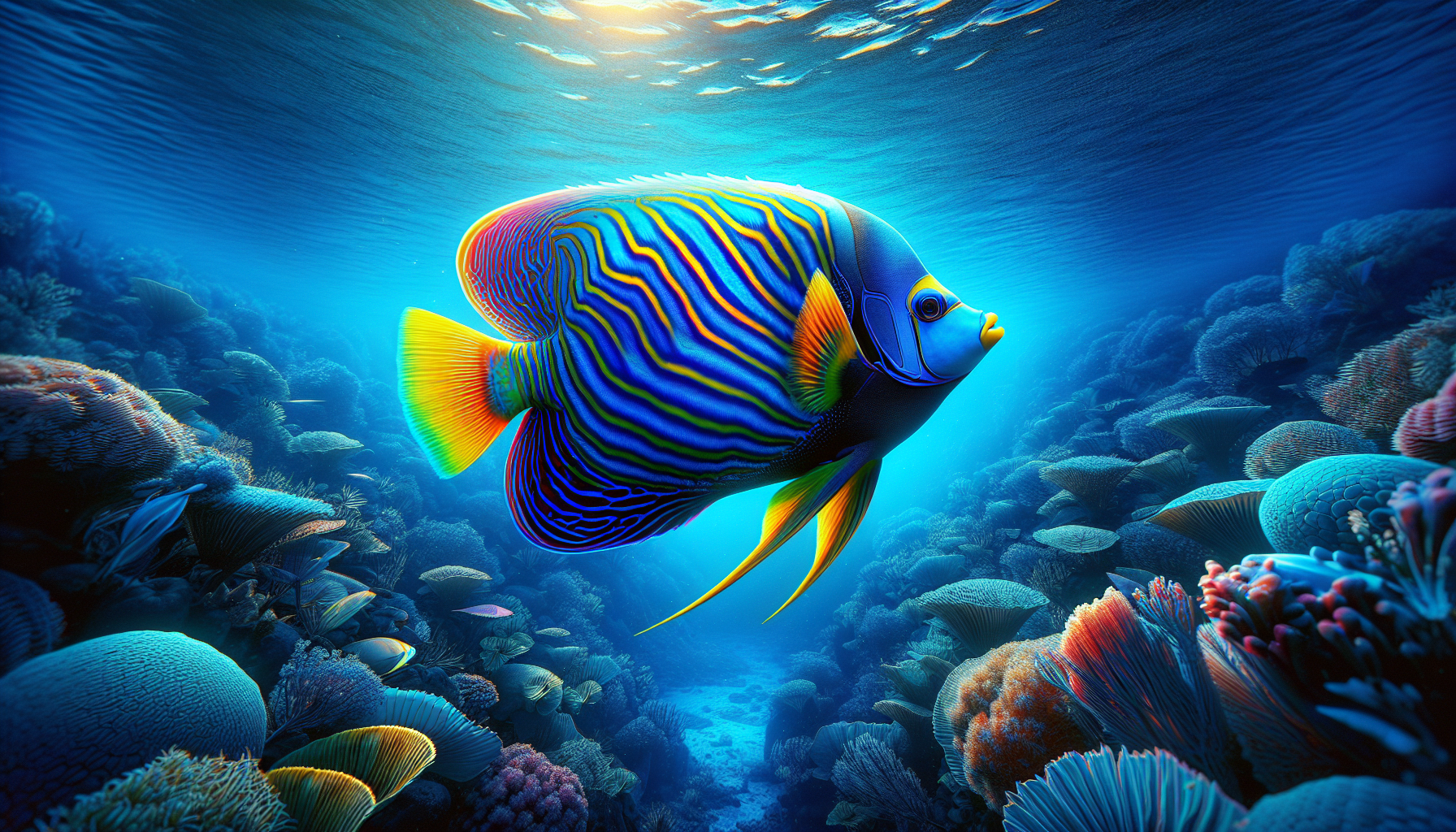
Royal Angelfish in Mauritius: A Living Masterpiece on the Reef
The Royal Angelfish (Pygoplites diacanthus), known in French as Poisson ange royal, is widely regarded as one of the most strikingly beautiful fish found on Indo-Pacific reefs. In Mauritius, this species is a common resident of healthy coral reef environments, bringing bursts of colour to dives across the island. Whether you are a seasoned diver or a first-time snorkeller, spotting a Royal Angelfish in the wild is an experience that stays with you long after you surface.
Identification: How to Recognise Pygoplites diacanthus
The Royal Angelfish is virtually unmistakable. Its body is adorned with a series of bold diagonal stripes alternating between vivid orange-yellow and white, each outlined by electric blue edging. The dorsal and anal fins trail gracefully and are marked with blue streaks, while the face displays a striking yellow-orange mask. Adults typically reach 25 to 30 centimetres in length. Unlike many angelfish species, juvenile and adult Royal Angelfish share a similar colour pattern — though juveniles tend to display a distinctive black eyespot (ocellus) on the dorsal fin that fades with age. The fish belongs to the family Pomacanthidae and is the sole species in the genus Pygoplites, making it truly one of a kind.
Behaviour and Habitat in Mauritian Waters
In Mauritius, Royal Angelfish are typically observed in coral-rich areas between 5 and 40 metres depth, showing a strong preference for well-developed reef structures with abundant coral cover. They are most commonly spotted darting in and out of crevices, caves, and overhangs — behaviours driven by their naturally shy and cautious temperament. They are omnivorous, feeding primarily on sponges and tunicates, which is why they are strongly associated with healthy reef ecosystems where these invertebrates flourish.
Royal Angelfish are usually seen alone or in pairs, and in Mauritius, established pairs can often be observed in consistent territories around particular reef structures over extended periods. Approaching them slowly and avoiding sudden movements is the best strategy for a prolonged encounter — experienced divers know to maintain a respectful distance and let the fish acclimatise to their presence.
Where to See Royal Angelfish in Mauritius
Mauritius offers a wealth of dive sites where Royal Angelfish can reliably be spotted. The north and west coasts are particularly productive, with coral gardens and walls providing ideal habitat. Sites around Grand Baie, Flic en Flac, and the Blue Bay Marine Park in the south-east are especially recommended. Cathedral Cave near Flic en Flac is a legendary dive where Royal Angelfish are frequently encountered hovering near the cave entrance. The marine protected areas around Mauritius provide critical refuges for this species, and their conservation is directly linked to the health of these reef systems.
Conservation and Reef Health
The Royal Angelfish is currently listed as Least Concern on the IUCN Red List, reflecting its relatively stable populations across the Indo-Pacific. However, like all reef fish, it is vulnerable to the wider threats facing coral reef ecosystems — including climate change-induced bleaching, pollution, and coastal development. In Mauritius, ongoing reef monitoring and the enforcement of marine protected area regulations play a vital role in maintaining healthy populations of this and many other species.
For divers, the Royal Angelfish serves as an excellent indicator of reef health. Its presence in good numbers at a site generally signals a productive, well-functioning ecosystem with adequate sponge and tunicate populations. Supporting responsible dive operators and choosing reef-safe practices helps ensure that future generations of divers and snorkellers in Mauritius can continue to enjoy this magnificent fish.
Tips for Diving with Royal Angelfish
- Move slowly and avoid chasing — let the fish come to you.
- Dive during morning hours when fish are most active around coral heads.
- Look inside caves and overhangs where Royal Angelfish love to shelter.
- A wide-angle macro lens or a compact camera with good colour rendering will capture their vivid patterns beautifully.
- Respect no-take and no-touch policies in all Mauritian marine reserves.