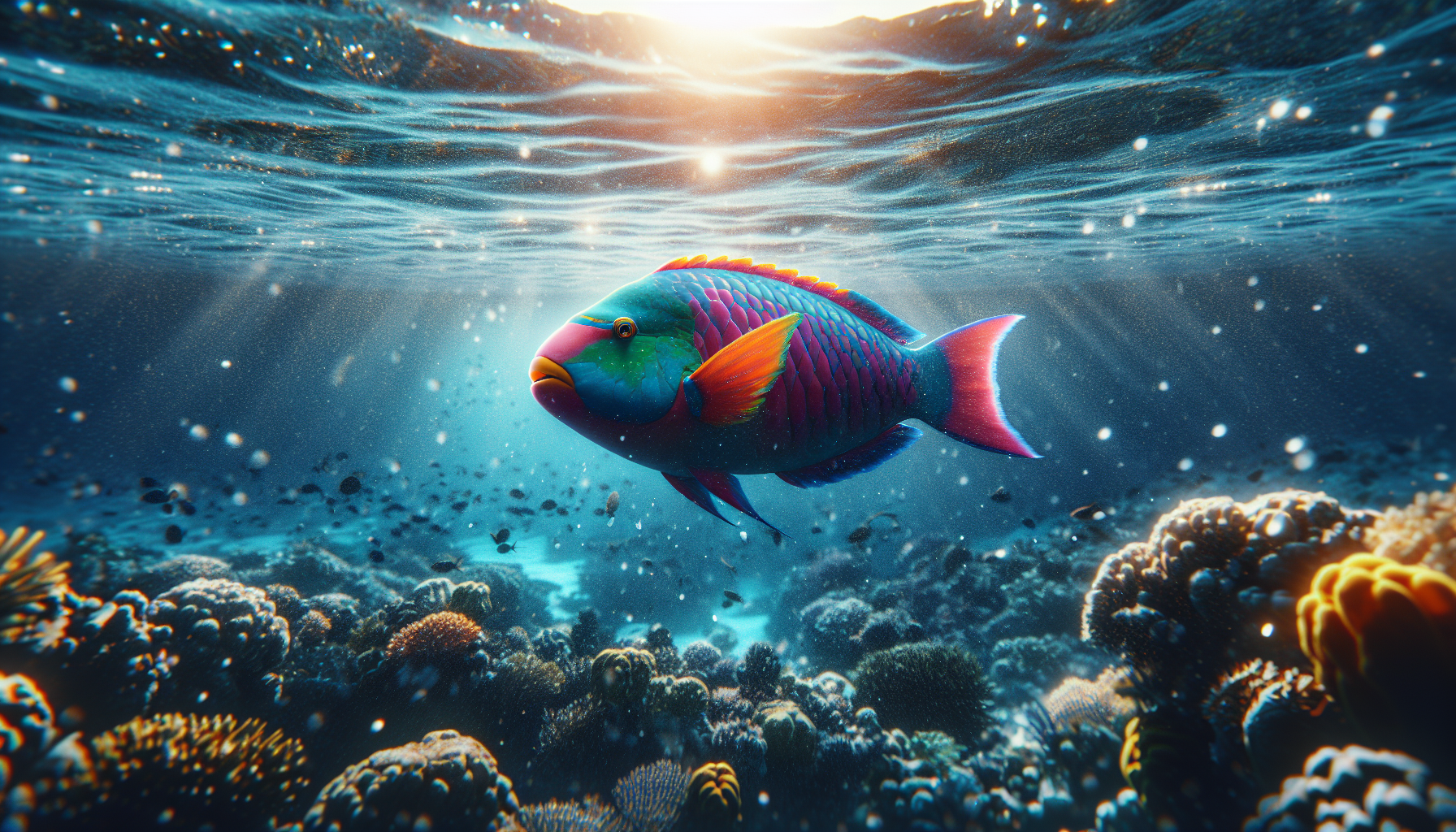
Bicolor Parrotfish in Mauritius: A Diver's Guide
The Bicolor Parrotfish (Cetoscarus bicolor), known locally as Poisson perroquet bicolore, is one of the largest and most recognisable parrotfish species found on the reefs of Mauritius. Growing up to 90 cm in length, this spectacular fish is a staple sighting for divers and snorkellers exploring Mauritius's diverse marine habitats, from shallow lagoons protected by the fringing reef to deeper outer reef slopes.
Appearance and Identification
The Bicolor Parrotfish undergoes dramatic colour transformations throughout its life, making identification a genuinely exciting challenge. Juveniles are striking in appearance: predominantly white with a broad reddish-brown or black horizontal stripe running from snout to tail, often accompanied by a distinctive white spot on the upper body. As the fish matures into its initial phase, colours become more mottled with patches of reddish-brown and pale hues.
The most breathtaking form is the terminal phase male, which transforms into a masterpiece of colour. The body displays a rich mosaic of blue-green scales with pink and orange edging, while the face is adorned with swirling patterns of turquoise, pink and yellow around the fused beak-like teeth — the hallmark feature of all parrotfish. This powerful beak is used to scrape algae and living coral polyps from reef surfaces, a feeding strategy that plays a crucial ecological role.
Behaviour and Ecology
Like all parrotfish, Cetoscarus bicolor is a diurnal species, most active during daylight hours when it can be observed busily grazing across the reef. The crunching sound of its beak scraping coral is one of the iconic soundscapes of a healthy Mauritian reef. After digesting the organic matter, the fish excretes fine white sand — a surprisingly significant source of the powdery white sand found on Mauritius's famous beaches. A single large Bicolor Parrotfish can produce hundreds of kilograms of sand per year.
At night, parrotfish seek shelter in crevices or caves and many species, including the Bicolor Parrotfish, secrete a protective mucus cocoon around their bodies to mask their scent from nocturnal predators such as moray eels. Encountering one of these sleeping fish during a night dive is a truly memorable experience.
Cetoscarus bicolor is typically seen solitary or in small groups, often within territories on the reef. Terminal-phase males are particularly territorial and will defend feeding areas from rivals. The species is protogynous hermaphrodite, meaning individuals begin life as females and some will transition to males as they mature — a common reproductive strategy among parrotfish.
Role in the Reef Ecosystem
The ecological importance of the Bicolor Parrotfish cannot be overstated. By grazing on algae that would otherwise smother corals, parrotfish act as natural reef gardeners, promoting coral recruitment and overall reef health. Their bioerosion activities also contribute to the physical structure of the reef over geological timescales. Healthy parrotfish populations are widely considered a strong indicator of a thriving coral reef ecosystem.
Snorkelling and Diving in Mauritius
Mauritius offers exceptional opportunities to observe the Bicolor Parrotfish in its natural habitat. The island is encircled by a near-continuous barrier reef and lagoon system, creating sheltered, clear waters ideal for both beginners and experienced divers. Visibility frequently exceeds 20 metres on outer reef sites, making close observation and underwater photography highly rewarding. The species is common throughout Mauritian waters and can be encountered year-round, though activity levels peak during the warmer months when water temperatures rise above 27°C.
Conservation
While the Bicolor Parrotfish is currently assessed as Least Concern by the IUCN, it faces ongoing pressures from habitat degradation, coral bleaching, and overfishing in some parts of its range. In Mauritius, marine park protections at key sites help safeguard parrotfish populations. Responsible diving — maintaining buoyancy, avoiding contact with the reef, and supporting sustainable fisheries — ensures these magnificent fish continue to grace Mauritian reefs for generations to come.