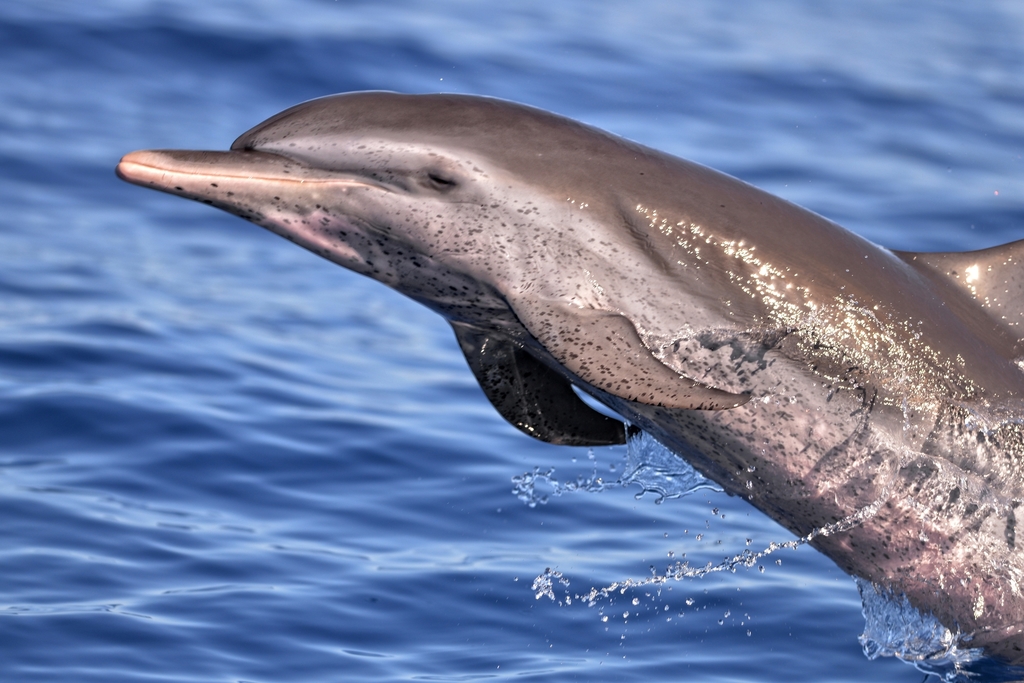
Pantropical Spotted Dolphin in Mauritius
The pantropical spotted dolphin (Stenella attenuata), known in French as the Dauphin tacheté, is one of the most iconic and frequently encountered cetaceans in the warm waters surrounding Mauritius. Distributed across tropical and subtropical oceans worldwide, this species thrives in the Indian Ocean, and the island's nutrient-rich waters provide an ideal habitat for resident and transient pods throughout the year.
Identification and Physical Characteristics
Adult pantropical spotted dolphins are immediately recognisable by their distinctive spotted patterning, though younger individuals are born plain grey and develop their characteristic spots gradually with age. Adults typically measure between 1.7 and 2.4 metres in length and weigh up to 120 kilograms. Their slender, streamlined bodies are built for speed, with a dark grey cape running along the dorsal surface, a lighter grey flanks, and a pale or white belly. A prominent rostrum (beak) and erect falcate dorsal fin complete the profile. Offshore populations, such as those found around Mauritius, tend to be more heavily spotted than coastal variants found elsewhere in the world.
Behaviour and Social Structure
One of the most compelling reasons to seek out pantropical spotted dolphins in Mauritius is their highly social and expressive behaviour. These dolphins live in groups ranging from a few individuals to pods of several hundred, and they are well known for their acrobatic leaps, bow-riding, and rapid swimming bursts that can exceed 22 kilometres per hour. They communicate using a sophisticated repertoire of clicks and whistles, and their interactions within the pod — including play behaviours, mother-calf bonding, and cooperative hunting — make for endlessly fascinating observation.
Around Mauritius, pods are commonly encountered in the early morning hours when the sea is calm, often feeding on small fish and squid near the surface before the midday heat sets in. The west coast of the island, particularly the waters around Tamarin Bay and Black River (Rivière Noire), has become a world-renowned destination for swimming with wild dolphins, with these spotted dolphins frequently sharing the water with spinner dolphins (Stenella longirostris).
Where to See Them in Mauritius
The sheltered lagoons and deeper offshore waters off the west and southwest coasts of Mauritius are the prime locations for encountering pantropical spotted dolphins. Local boat operators depart from Black River and Tamarin each morning, offering guided dolphin-watching and swimming excursions that give participants a genuine wild encounter rather than a captive experience. The dolphins are free to approach or depart at will, making each interaction uniquely authentic.
Beyond the popular dolphin-swimming tours, scuba divers exploring sites along the west coast — including La Cathédrale, Rempart Serpent, and Passe Saint-Jacques — occasionally encounter spotted dolphins during their dives, particularly when descending through open water on the outer reef slopes. Snorkelers joining catamaran day trips along the west coast also report frequent close encounters.
Ecological Importance and Conservation
As apex predators of small pelagic fish and cephalopods, pantropical spotted dolphins play a vital role in maintaining the balance of marine ecosystems around Mauritius. Historically, this species suffered enormous losses worldwide due to tuna purse-seine fishing operations, which tragically targeted dolphin pods as indicators of yellowfin tuna schools. Thanks to international pressure and the adoption of dolphin-safe fishing practices, global populations have partially recovered, though threats from bycatch, marine pollution, habitat degradation, and climate change continue.
In Mauritius, these dolphins are protected under national wildlife legislation, and responsible dolphin-watching guidelines have been introduced to minimise disturbance to feeding and resting animals. Visitors are encouraged to choose operators who comply with these regulations and observe dolphins without chasing, circling, or separating mother-calf pairs.
Tips for a Responsible Encounter
- Book with a licensed operator who follows Mauritius Wildlife Foundation guidelines.
- Enter the water calmly and avoid chasing or touching the dolphins.
- Keep groups small and noise levels low to avoid stressing the animals.
- Snorkel quietly and allow the dolphins to approach you on their own terms.
- Choose morning excursions when dolphins are most active near the coast.