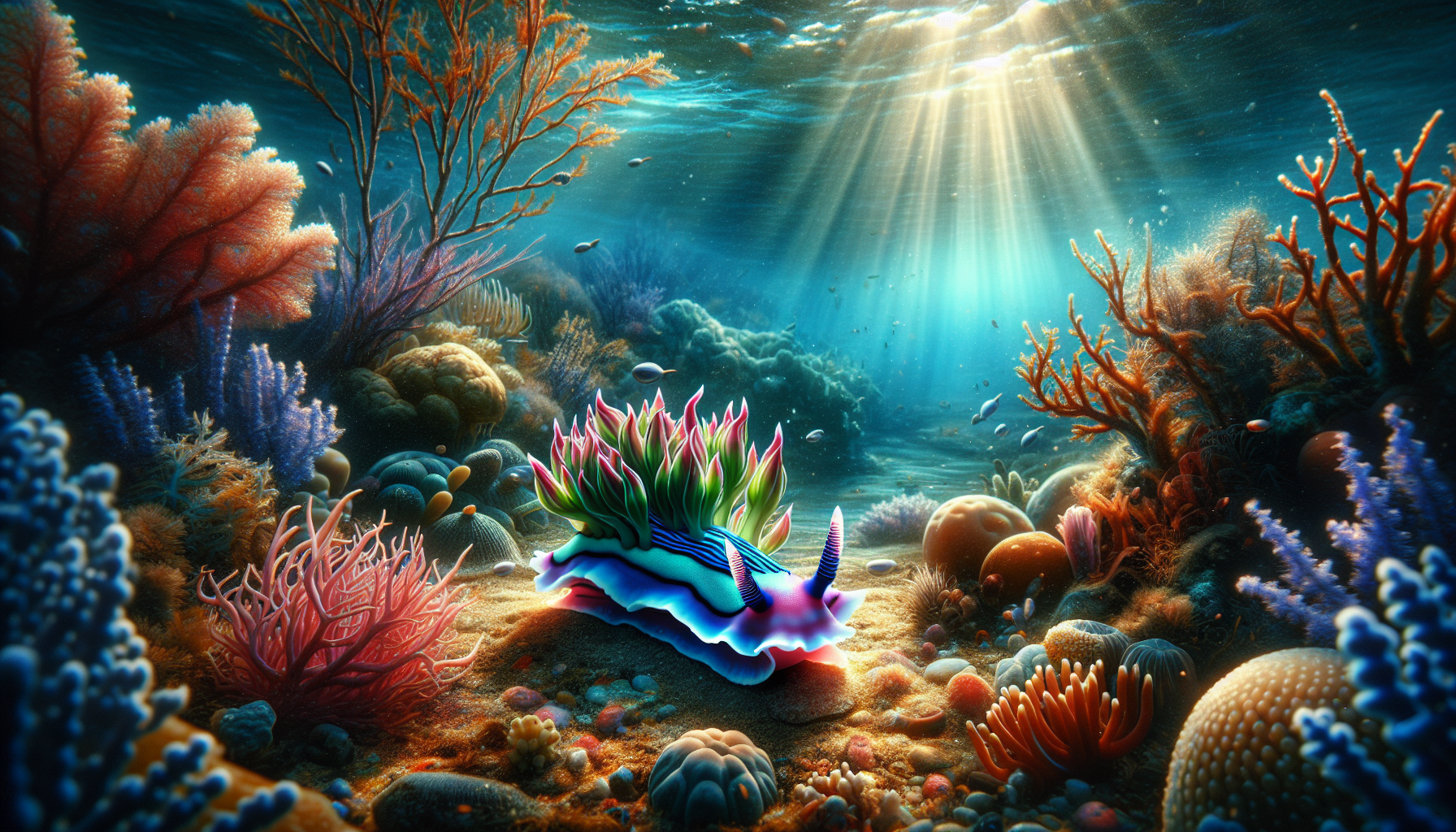
Chromodoris Nudibranchs in Mauritius
Nudibranchs of the genus Chromodoris are among the most celebrated invertebrates found on Mauritian reefs. These soft-bodied molluscs — commonly known as sea slugs — shed their shells after the larval stage and instead evolved something far more remarkable: dazzling colour patterns that serve as nature's warning system to would-be predators. In Mauritian waters, several species of Chromodoris are regularly encountered, including Chromodoris annae, Chromodoris lochi, and Chromodoris willani, each boasting its own signature palette of blues, purples, whites, and blacks.
Identification and Physical Characteristics
Chromodoris nudibranchs are typically small, ranging from just 2 to 8 centimetres in length, yet their vivid colouration makes them surprisingly easy to spot against the reef substrate. Their bodies are elongated and flattened, adorned with a mantle that often features bold contrasting stripes or spots. At one end, a cluster of feathery gill plumes (known as the branchial plume) fans out elegantly, while a pair of rhinophores — sensory organs resembling tiny antennae — protrude from the head to detect chemical signals in the water. The combination of these features makes Chromodoris species among the most photogenic subjects in all of underwater photography.
Behaviour and Diet
Far from passive creatures, Chromodoris nudibranchs are active predators that feed almost exclusively on sponges. They locate their prey using their sensitive rhinophores and graze slowly across the reef surface, leaving tell-tale feeding trails on sponge colonies. One of their most fascinating behavioural adaptations is their ability to sequester toxic compounds from the sponges they consume, incorporating these chemicals into their own tissues to make themselves unpalatable to fish and other predators. This chemical defence, combined with their aposematic (warning) colouration, gives them a powerful survival strategy despite their seemingly defenceless appearance.
Reproduction
Chromodoris nudibranchs are simultaneous hermaphrodites, meaning each individual possesses both male and female reproductive organs. When two individuals meet, they can mate in both roles simultaneously, a remarkable biological efficiency. After mating, they deposit distinctive spiral or ribbon-shaped egg masses on the reef, which are also often brightly coloured to warn predators. The eggs hatch into free-swimming veliger larvae before eventually settling on the reef and metamorphosing into juvenile nudibranchs.
Where to Find Chromodoris Nudibranchs in Mauritius
Mauritius offers excellent conditions for nudibranch encounters thanks to its warm, clear waters and diverse reef ecosystems. Chromodoris species are most commonly found at depths between 5 and 30 metres, where sponge communities thrive on sheltered reef walls, rubble slopes, and beneath coral overhangs. Patient divers who slow down and look closely at the reef — rather than swimming past — are consistently rewarded with sightings. The island's leeward western and northern coastlines tend to offer the most productive nudibranch hunting, where calmer conditions allow for the slow, attentive style of diving that nudibranch spotting demands.
Tips for Spotting Nudibranchs
Spotting Chromodoris nudibranchs requires a shift in diving mindset. Rather than covering large distances, experienced nudibranch hunters slow their pace dramatically and scan carefully along the base of coral heads, under rubble, and on sponge-encrusted surfaces. Carrying a small torch or dive light even during the day helps reveal the vivid colours hiding in shadowed reef crevices. Early morning dives often yield the best results, as nudibranchs tend to be more active during these quieter periods. A macro lens or close-up filter is highly recommended for underwater photographers hoping to capture the incredible detail of these miniature masterpieces.
Ecological Importance
Beyond their obvious aesthetic appeal, Chromodoris nudibranchs play a meaningful role in reef ecosystems as regulators of sponge populations. Their selective feeding behaviour helps control the spread of certain sponge species, contributing to the overall balance and biodiversity of Mauritian coral reefs. Their sensitivity to water quality and reef health also makes them useful bioindicators — a healthy nudibranch population is often a sign of a healthy reef.