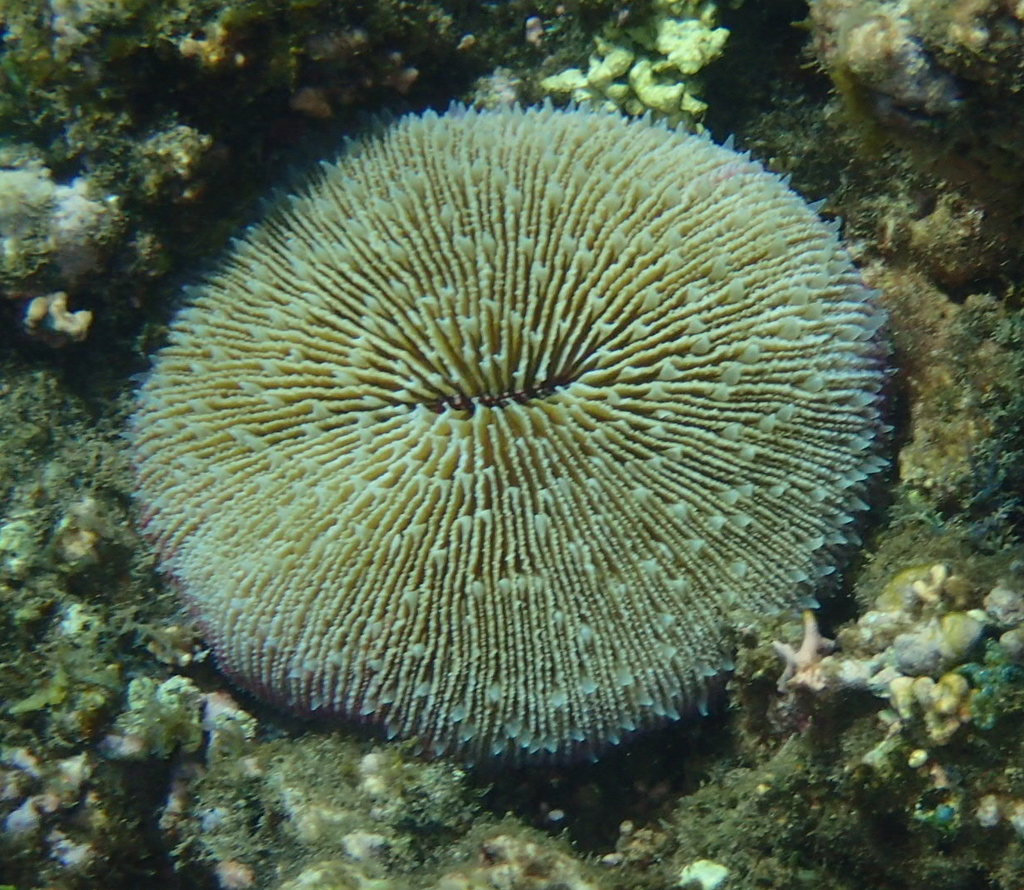
Mushroom Coral in Mauritius – Fungia spp.
Among the many coral species that adorn the reefs of Mauritius, the mushroom coral (Fungia spp.) stands out as one of the most visually distinctive and biologically fascinating. Named for their striking resemblance to the cap of a mushroom, these free-living corals are a common and captivating sight for divers and snorkellers exploring the island's rich marine environment.
What Is Mushroom Coral?
Unlike the vast majority of reef-building corals, mushroom corals are solitary polyps — meaning each individual coral is a single, large polyp rather than a colony. They belong to the family Fungiidae and the genus Fungia, which encompasses numerous species found across the Indo-Pacific, including the warm waters surrounding Mauritius. Their circular to oval disc shape, ridged upper surface radiating outward like spokes on a wheel, and fleshy tissue give them an unmistakable appearance. They typically range from 10 to 30 centimetres in diameter, though some specimens can grow considerably larger.
One of the most remarkable aspects of mushroom corals is their ability to move independently. While they begin life attached to a hard substrate, adult mushroom corals detach and become free-living, resting on sandy bottoms or rubble zones. Through slow, deliberate muscular contractions, they can right themselves if overturned and even reposition to access better light or water flow — a feat virtually unheard of in the coral world.
Appearance and Behaviour
Mushroom corals display a wide range of colours including cream, brown, green, grey, and pink, often with subtle iridescent hues. The upper surface is covered in radiating septa (ridges) interspersed with softer tissue, giving them a textured, almost alien look. At night or when feeding, they expand their fleshy mantle and extend tentacles to capture zooplankton from the water column. Like most corals, they also host symbiotic algae called zooxanthellae, which provide essential nutrients through photosynthesis during daylight hours.
Mushroom corals are known to be relatively resilient compared to branching corals. Their fleshy tissue can recover from minor abrasions, and their free-living nature means they are less susceptible to smothering by sediment — they can simply inflate and shift position. However, they are not immune to bleaching events triggered by elevated sea temperatures.
Where to Find Mushroom Coral in Mauritius
In Mauritius, mushroom corals are a common species found across a variety of habitats — from shallow lagoons and reef flats to deeper reef slopes reaching 20–30 metres. They are typically spotted resting on sandy patches between coral formations, on rubble zones at the base of reefs, or on gently sloping seafloors where sediment can accumulate. Their solitary and stationary nature makes them easy to observe up close, and they are a favourite subject for underwater photographers.
Some of the best dive sites to encounter mushroom coral in Mauritius include the renowned reefs off the west coast and the marine park areas of the south and north of the island, where the diversity and density of coral life is at its peak.
Conservation and Responsible Diving
Although mushroom corals are listed as species of Least Concern overall, they remain vulnerable to the broader threats facing coral ecosystems in Mauritius — including climate change, ocean acidification, coastal development, and irresponsible tourism practices. Divers and snorkellers are strongly encouraged to maintain good buoyancy control and never touch, stand on, or collect mushroom corals. Even though they can move, physical disturbance causes stress and can damage their delicate tissue.
Mauritius has established marine protected areas (MPAs) such as the Blue Bay Marine Park to safeguard critical reef habitats. Supporting local conservation initiatives and choosing eco-conscious dive operators are meaningful ways to help protect these living sculptures for future generations.
Whether you're a seasoned diver or a first-time snorkeller, spotting a mushroom coral resting peacefully on the sandy floor of a Mauritian reef is one of those quiet, memorable moments that remind you just how extraordinary life beneath the ocean's surface truly is.