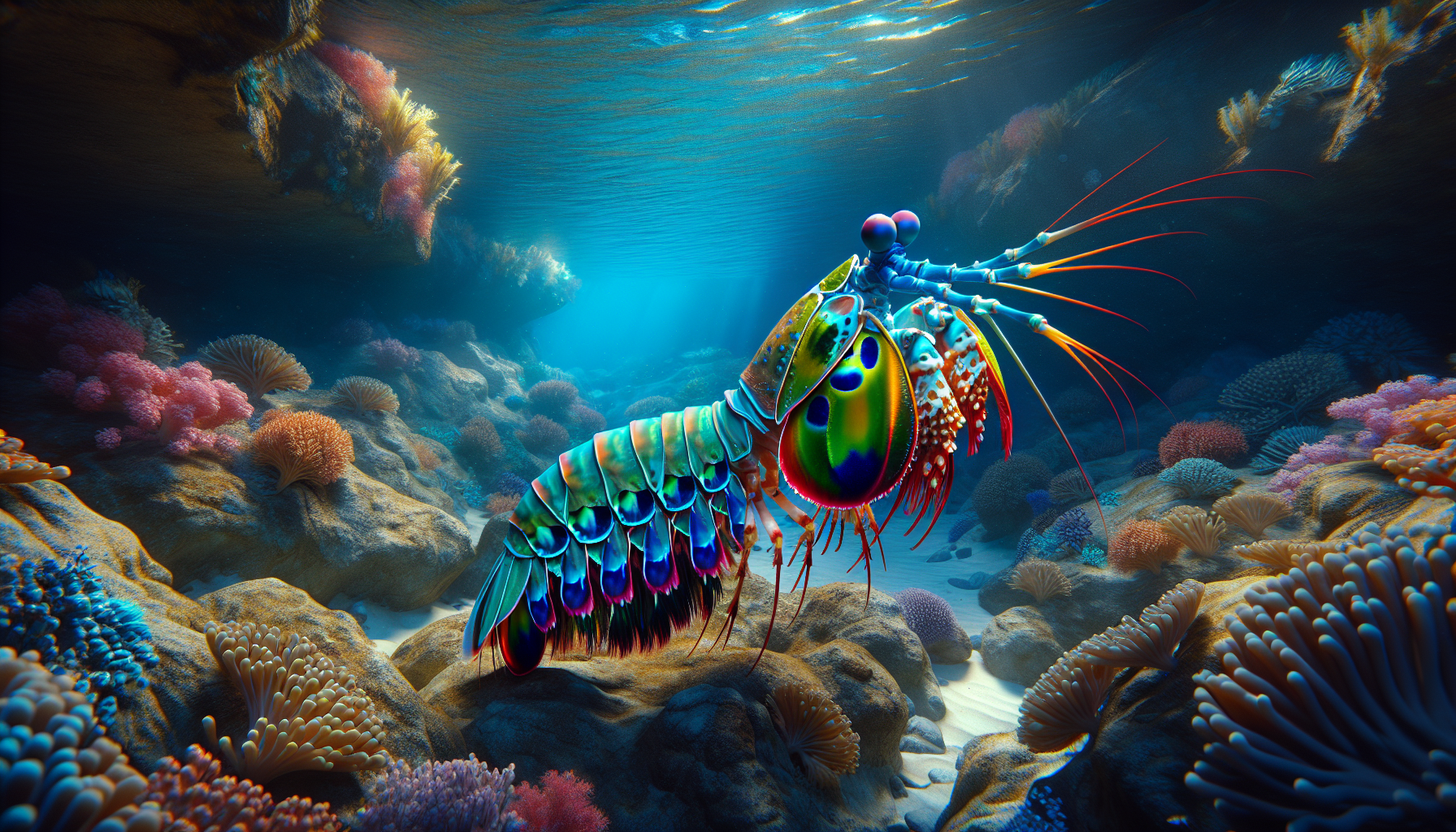
Peacock Mantis Shrimp in Mauritius
The peacock mantis shrimp (Odontodactylus scyllarus), known locally as the squille multicolore, is one of the most extraordinary invertebrates inhabiting the warm, clear waters surrounding Mauritius. Growing to lengths of up to 18 cm, this stomatopod crustacean is instantly recognisable by its vivid, multicoloured body — a mesmerising blend of emerald green, cobalt blue, scarlet red, and electric orange that makes it look more like a living gemstone than a marine animal.
Appearance and Identification
Unlike true shrimps, mantis shrimps belong to the order Stomatopoda and are only distantly related to crabs and lobsters. The peacock mantis shrimp is the largest and most colourful of its kind, with a robust, flattened body divided into clearly defined segments. Its compound eyes are among the most sophisticated in the animal kingdom, capable of perceiving 16 types of colour receptors — compared to just three in humans — as well as ultraviolet and polarised light. These extraordinary eyes move independently, giving the animal a surreal, almost robotic appearance that makes them particularly fascinating to observe underwater.
The Smashing Club: Nature's Most Powerful Strike
What truly sets the peacock mantis shrimp apart is its pair of enlarged raptorial appendages, known as dactyl clubs. These powerful limbs can strike at speeds exceeding 80 kilometres per hour, generating forces strong enough to shatter clamshells, crack thick crab exoskeletons, and even break aquarium glass. The strike creates cavitation bubbles that produce a secondary shockwave, effectively hitting prey twice in rapid succession. Divers and photographers should approach with respectful caution — while attacks on humans are rare, a strike from a large individual can cause a serious wound.
Behaviour and Habitat in Mauritius
In Mauritius, peacock mantis shrimps are commonly found in sandy substrates and rubble zones adjacent to coral reefs, typically at depths ranging from 3 to 40 metres. They are territorial, solitary animals that excavate U-shaped burrows in sand or rubble, using these as a base for hunting and shelter. Divers most often spot them in the entrance of their burrows, where they sit alertly watching for prey — small fish, crabs, molluscs, and other crustaceans. Hunting activity peaks at dawn and dusk, making early morning dives particularly rewarding for those hoping to observe active foraging behaviour.
Diving with Peacock Mantis Shrimps in Mauritius
Mauritius offers excellent conditions for observing peacock mantis shrimps throughout the year. The island's diverse reef ecosystems — from shallow lagoons protected by fringing reefs to deeper outer reef walls — provide ideal habitat for this species. Patient, slow-moving divers and snorkellers who take the time to scan sandy reef margins and rubble patches are regularly rewarded with close-up encounters. Underwater photographers prize the peacock mantis shrimp as a macro subject, though capturing a sharp image requires patience, as the animal rarely remains completely still for long. Using a red filter or strobes dramatically enhances the vivid colours in photographs.
Ecological Role
As an apex invertebrate predator, the peacock mantis shrimp plays an important role in maintaining the ecological balance of Mauritius's reef ecosystems. By controlling populations of molluscs and crustaceans, it contributes to the health and biodiversity of coral reef communities. Its presence is often used by marine biologists as an indicator of healthy reef conditions with adequate sandy habitat and prey availability.
Conservation in Mauritius
The peacock mantis shrimp is currently classified as a species of Least Concern by the IUCN, and it remains relatively common throughout Mauritius's marine protected areas and open reef zones. However, like all marine life in Mauritius, it benefits from the protections offered by the country's network of marine parks and responsible dive tourism practices. Visitors are encouraged to observe without touching or disturbing these animals, ensuring that future generations of divers can continue to enjoy one of the reef's most spectacular residents.