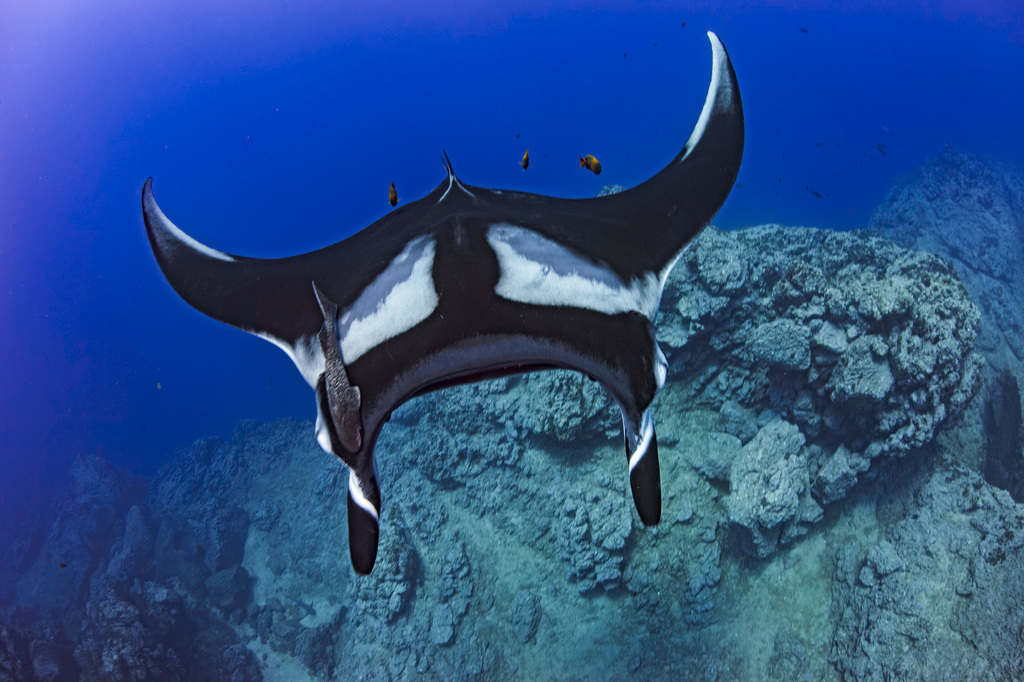
Manta Ray (Raie Manta) in Mauritius — Mobula birostris
The giant oceanic manta ray, known locally as raie manta, is one of the most majestic creatures to grace the warm, turquoise waters surrounding Mauritius. Classified under Mobula birostris, this species is the largest ray in the world, with a disc width that can reach an extraordinary 7 metres and a weight of up to 2,000 kilograms. Despite their imposing size, manta rays are completely harmless to humans, feeding exclusively on microscopic zooplankton, fish eggs, and small crustaceans filtered from the water column.
Identifying the Giant Oceanic Manta Ray
Manta rays are unmistakable beneath the surface. Their distinctive cephalic fins — horn-like lobes flanking a broad, forward-facing mouth — give them an almost prehistoric appearance. Their dorsal surface is typically dark grey to black, while the ventral side is predominantly white, often marked with unique spot patterns that researchers use for individual identification. Unlike stingrays, manta rays possess no venomous spine, making them entirely docile companions underwater. Their fluid, wing-like pectoral fins create a hypnotic, bird-like motion as they soar through the ocean currents.
Seasonal Presence in Mauritius
Manta rays are seasonal visitors to Mauritian waters, most reliably encountered between the months of November and April, which correspond to the warm austral summer season. During this period, plankton blooms are triggered by warmer sea temperatures and specific current patterns, drawing mantas to predictable feeding and cleaning stations. The east and south-east coasts of Mauritius are particularly productive areas, where upwellings concentrate food sources close to the reef systems. Sightings can also occur outside this window, though they are less predictable.
Best Dive Sites for Manta Rays in Mauritius
Several dive sites around Mauritius have earned a strong reputation for manta ray encounters. Flat Island and the waters off the north coast attract mantas drawn to cleaning stations, where small wrasses and other reef fish remove parasites from the rays' skin and gills — a mesmerising behaviour to observe. The Rivière Noire (Black River) region on the west coast and the offshore seamounts near Le Morne are also regarded as prime locations. Experienced local dive operators can guide visitors to the most active sites based on current seasonal conditions.
Behaviour and Ecology
Manta rays are highly intelligent animals, possessing the largest brain-to-body ratio of any fish. They are known to exhibit curiosity toward divers, sometimes approaching within metres for extended periods. Their behaviour at cleaning stations is particularly fascinating — they adopt a near-stationary position and return repeatedly to the same reef features, indicating strong site fidelity. Barrel rolls near the surface are associated with feeding on dense plankton patches and are a thrilling spectacle for snorkellers and freedivers alike. Manta rays are also known to breach the ocean's surface, leaping completely clear of the water in dramatic displays.
Conservation Status and Threats
The giant oceanic manta ray is listed as Endangered on the IUCN Red List, facing significant global pressure from targeted fisheries, bycatch, boat strikes, and marine pollution, including entanglement in ghost fishing gear. Their slow reproductive rate — females typically give birth to just one pup every two to three years — makes population recovery extremely challenging. In Mauritius, growing ecotourism interest has elevated awareness of their conservation value, and responsible dive operators adhere to strict wildlife encounter guidelines. Divers are encouraged to maintain a respectful distance, avoid flash photography, and never attempt to touch or ride these animals.
Tips for Responsible Manta Ray Encounters
- Maintain a minimum distance of 3 metres at all times.
- Approach slowly and avoid sudden movements or loud noises.
- Do not use flash photography, which can disorient and stress the animals.
- Never block the ray's path or attempt to intercept its movement.
- Choose dive operators who follow responsible wildlife tourism codes of conduct.
Encountering a manta ray in the waters of Mauritius is a profound reminder of the ocean's extraordinary biodiversity. By diving responsibly and supporting conservation initiatives, visitors play a vital role in ensuring these ocean giants continue to grace these waters for generations to come.