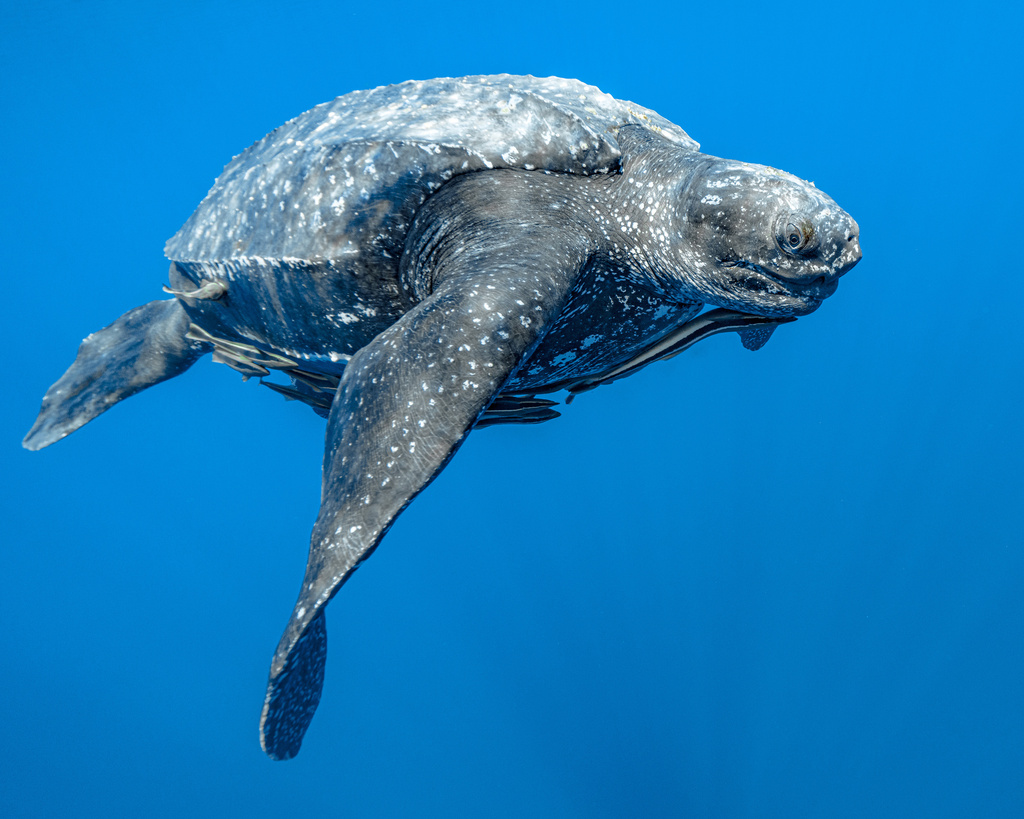
Leatherback Turtle in Mauritius: The Ocean's Gentle Giant
Of all the marine creatures that grace the warm waters surrounding Mauritius, few command as much awe as the leatherback turtle (Dermochelys coriacea), called the Tortue luth in French. Unlike its hard-shelled relatives, the leatherback is unique among living turtles — its shell is covered by a layer of leathery, flexible skin reinforced with thousands of tiny bone fragments called osteoderms. This extraordinary adaptation, refined over more than 100 million years of evolution, makes it unmistakable in the water.
Physical Characteristics
The leatherback is a true titan. Adults typically measure between 1.5 and 1.8 metres in length, though specimens exceeding 2 metres have been recorded. Their weight ranges from 300 to over 900 kilograms, making them the heaviest reptile on Earth after the saltwater crocodile. Their distinctive dark, rubbery carapace is marked by seven prominent ridges running lengthwise, and their front flippers — sometimes spanning over 2.7 metres tip to tip — are perfectly engineered for deep oceanic travel. Despite their imposing size, leatherbacks are gentle, pelagic wanderers whose diet consists almost entirely of jellyfish.
Behaviour and Diet
Leatherbacks are built for the open ocean. They are capable of diving to depths exceeding 1,000 metres and can regulate their body temperature in cold waters far better than other reptile species — a remarkable physiological feat. In Mauritius, they are occasionally sighted in open water passages and around the outer reef edges, often following jellyfish blooms that drift on seasonal currents. Their throat and oesophagus are lined with backward-pointing spines called papillae, which prevent slippery jellyfish from escaping once caught.
Presence in Mauritius
Leatherback turtles are classified as rare visitors to Mauritius. Unlike the more commonly seen hawksbill and green turtles that frequent the island's coral reefs and lagoons, leatherbacks are highly pelagic — meaning they spend the vast majority of their lives in the open sea. Sightings around Mauritius tend to occur when individual animals stray closer to the coast, often in deeper, offshore waters. There are no known nesting sites for leatherbacks in Mauritius, as their primary nesting beaches are found along the Atlantic coast of Africa and in the Caribbean. However, the Indian Ocean does host a small nesting population, primarily centred around South Africa's KwaZulu-Natal coast, and wandering individuals occasionally pass through Mauritian waters during their transoceanic migrations.
Conservation Status
The leatherback turtle is listed as Vulnerable on the IUCN Red List globally, though certain subpopulations — particularly in the Pacific — are considered Critically Endangered. Threats include entanglement in fishing gear (bycatch), ingestion of plastic bags mistaken for jellyfish, egg poaching, coastal development, and boat strikes. In Mauritius, the Fisheries and Rodrigues Ministry, along with NGOs such as the Mauritius Marine Conservation Society (MMCS), work to protect all marine turtle species found in national waters under the Fisheries and Marine Resources Act.
Tips for Responsible Encounters
Should you be lucky enough to encounter a leatherback turtle in Mauritius, it is vital to observe responsible wildlife watching practices. Maintain a distance of at least 3 metres, never attempt to touch or ride the animal, avoid using flash photography, and do not block its path to the surface for air. Reporting sightings to local conservation authorities helps researchers track the movements of this magnificent but vulnerable species across the Indian Ocean.
Whether glimpsed from a boat in the blue open water or spotted on a deep offshore dive, an encounter with a leatherback turtle in Mauritius is a humbling reminder of nature's grandeur — and of our shared responsibility to protect it for future generations.