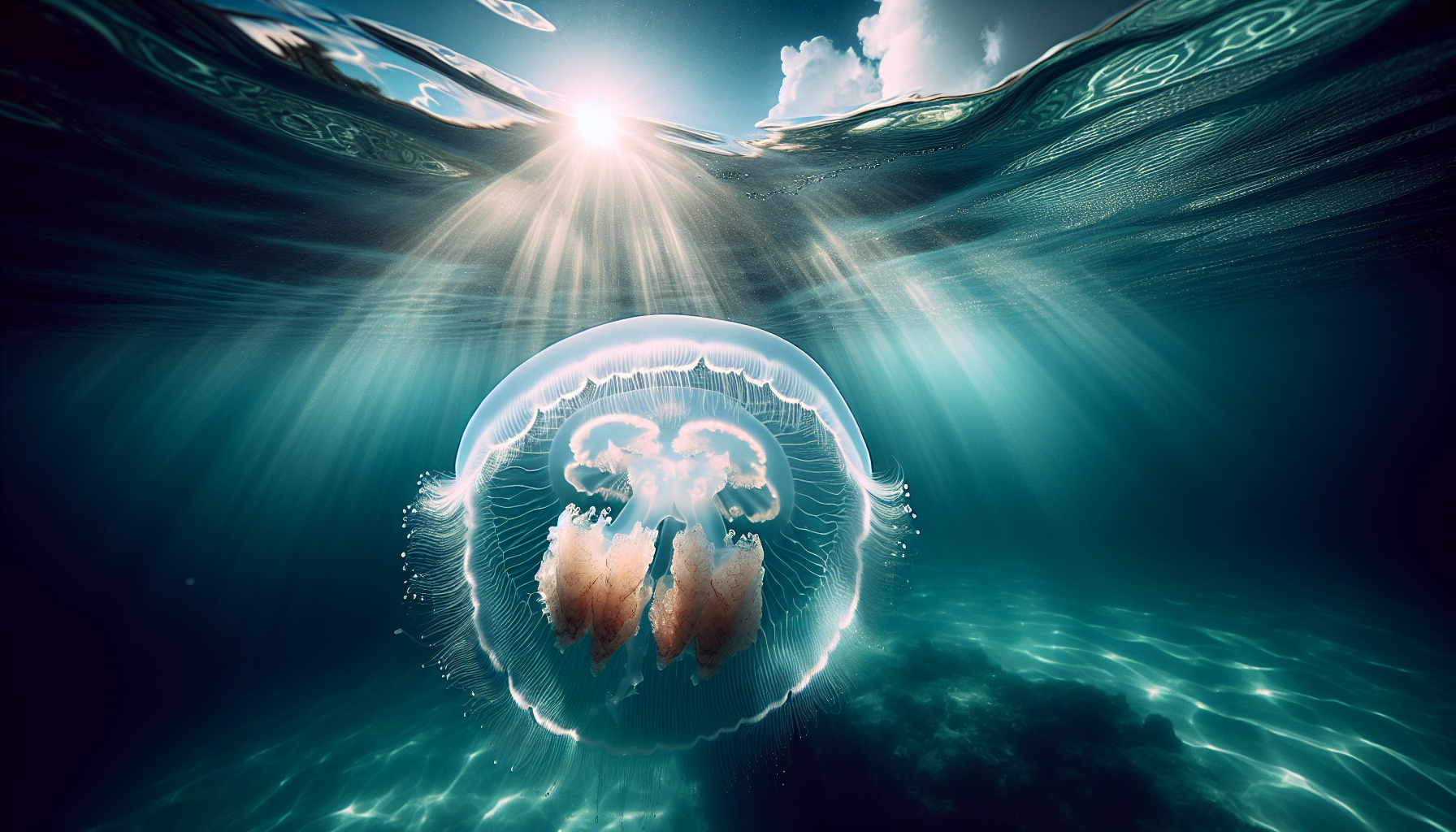
Moon Jellyfish in Mauritius – Aurelia aurita
The moon jellyfish (Aurelia aurita), or Méduse lune in French, is one of the most recognisable and widely distributed jellyfish species on the planet. In Mauritius, these delicate creatures make seasonal appearances in coastal lagoons, sheltered bays, and near-shore reef zones, offering divers, snorkellers, and even kayakers a truly magical natural spectacle. Their translucent, saucer-shaped bells — typically 25 to 40 centimetres in diameter — reveal a beautiful four-leaf clover pattern of violet or pink gonads visible right through their gelatinous bodies, making them unmistakable underwater.
Identification and Characteristics
Aurelia aurita belongs to the class Scyphozoa and is often called a
FAQ
Are moon jellyfish dangerous to swimmers and divers in Mauritius?
Moon jellyfish (Aurelia aurita) have very short, fine tentacles that carry a mild sting, generally too weak to penetrate human skin. Most people can swim or snorkel near them without any discomfort. However, individuals with sensitive skin or allergies to jellyfish venom should exercise caution, avoid direct contact, and consider wearing a rash guard or wetsuit as a barrier. Always avoid rubbing your eyes after contact with any jellyfish in the water.
When is the best time to see moon jellyfish in Mauritius?
Moon jellyfish are most commonly observed in Mauritius during the warmer, calmer months between November and April, coinciding with the southern hemisphere summer. During this period, blooms often appear in sheltered lagoons and bays, particularly after calm weather conditions when currents are gentle. Sightings are less predictable than resident reef species, so asking local dive operators about recent jellyfish activity is always recommended before heading out.
What is the ecological role of moon jellyfish in Mauritius reef ecosystems?
Moon jellyfish play an important role in the marine food web around Mauritius. They feed on zooplankton, small fish larvae, and organic particles, helping to regulate planktonic populations. In turn, they serve as a vital food source for large pelagic species such as ocean sunfish (Mola mola), leatherback sea turtles, and certain seabirds. Their seasonal blooms also attract other predators to nearshore areas, temporarily boosting biodiversity in the zones where they appear.