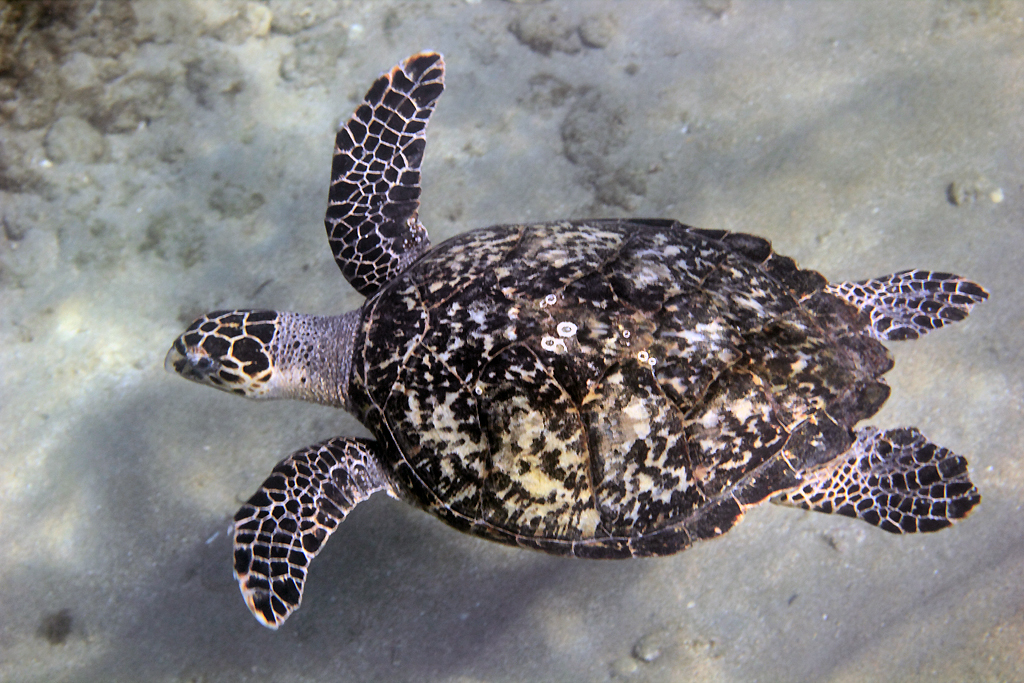
Hawksbill Turtle in Mauritius — A Complete Guide
The hawksbill turtle (Eretmochelys imbricata), known locally as tortue imbriquée, is the most frequently encountered marine turtle in Mauritian waters. Recognised by its narrow, pointed beak — perfectly shaped for extracting sponges and invertebrates from coral crevices — and its beautifully mottled amber-and-brown carapace, the hawksbill is an icon of tropical reef ecosystems worldwide.
Appearance and Identification
Adult hawksbill turtles typically measure between 60 and 90 cm in carapace length and weigh anywhere from 45 to 90 kg. Their most distinctive feature is the hawk-like beak that gives them their name, along with two pairs of prefrontal scales on the head and overlapping scutes on the shell — a trait unique among sea turtles. The shell pattern, once heavily harvested for the jewellery trade under the name tortoiseshell, is an intricate mosaic of amber, brown, and cream tones that makes each individual instantly recognisable.
Behaviour and Diet
Hawksbills are largely solitary, reef-associated turtles that spend most of their time foraging in shallow lagoons, coral reefs, and rocky outcrops. In Mauritius, their diet consists primarily of sponges, sea anemones, squid, and various crustaceans. By consuming sponges that would otherwise outcompete corals for reef space, hawksbills play a critical ecological role in maintaining the health and biodiversity of Mauritius's coral ecosystems. Divers frequently observe them methodically working their way across the reef, seemingly unperturbed by respectful human observers.
Hawksbill Turtles in Mauritius
Mauritius is fortunate to host a resident and relatively common hawksbill turtle population. The island's extensive fringing reefs, warm lagoons, and protected marine parks provide ideal foraging habitat year-round. Key nesting activity has been documented on several beaches around the island, particularly in the quieter northern and eastern coastal stretches. The Blue Bay Marine Park in the south-east is arguably the most reliable site for turtle encounters, but sightings are reported across virtually all major dive zones. Conservation organisations such as Reef Conservation Mauritius and Conscious Oceans run active monitoring and tagging programmes to better understand turtle movements around the island.
Conservation Status and Threats
The hawksbill turtle is classified as Critically Endangered on the IUCN Red List, making it one of the most threatened marine reptiles on the planet. Historically, Mauritius was a significant harvesting ground for hawksbill shells, and the effects of that trade are still felt in reduced population numbers. Today, the primary threats include bycatch in fishing nets, coastal development, marine debris ingestion, and climate change-driven coral bleaching which reduces prey availability. In Mauritius, turtles are legally protected under the Fisheries and Marine Resources Act, and it is illegal to harm, capture, or disturb them in any way.
Tips for a Responsible Encounter
- Maintain a respectful distance of at least 2 metres — never chase or swim directly towards a turtle.
- Do not touch turtles; human contact can remove protective skin oils and cause stress.
- Avoid using flash photography, which can disorient turtles, especially at night.
- If a turtle approaches you, remain calm and still — they are naturally curious creatures.
- Report any nesting activity or entangled turtles to local conservation authorities immediately.
Why Mauritius is Special for Hawksbill Turtles
The combination of warm Indian Ocean waters, pristine coral gardens, and year-round accessibility makes Mauritius a premier destination for divers seeking reliable hawksbill encounters. Whether you are exploring the famous passages of the north or drifting through the protected lagoons of the south, the chance of sharing the water with one of these ancient mariners is genuinely high. Every sighting is a reminder of both the ocean's beauty and the responsibility we hold to protect it.