Giant Trevally in Mauritius: The Ocean's Apex Ambush Predator
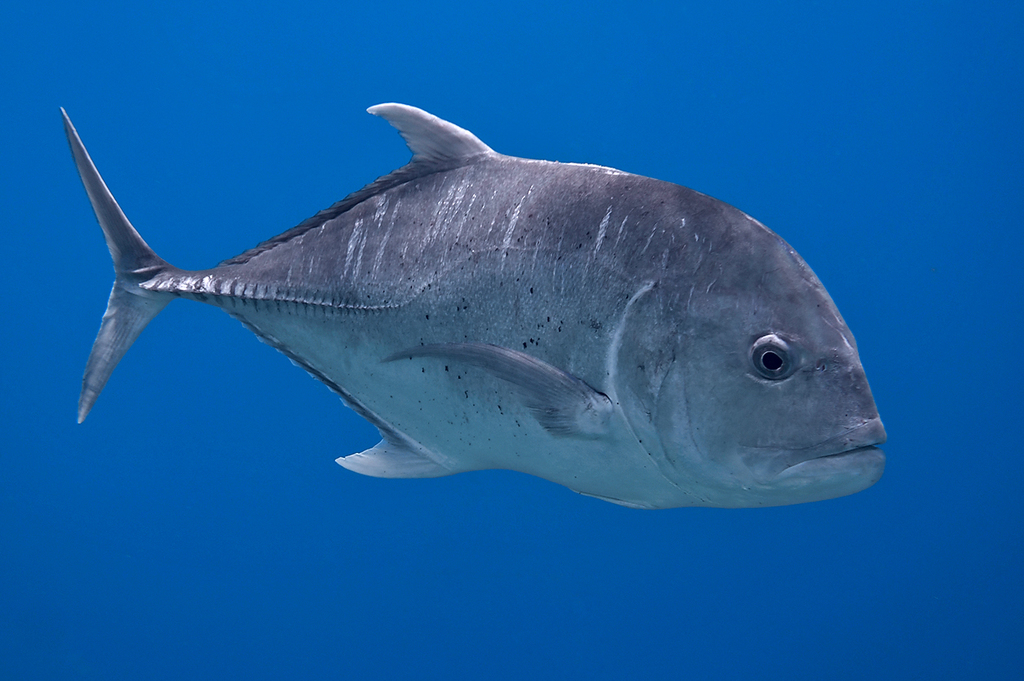
The Giant Trevally (Caranx ignobilis), or Carangue Géante in French, is one of the most formidable and electrifying fish you can encounter while diving in Mauritius. Belonging to the family Carangidae, this powerhouse of the reef is the largest member of the trevally genus, capable of reaching lengths of up to 170 cm and weighing over 80 kg. Its muscular, silver-flanked body, blunt forehead, and deeply forked tail make it instantly recognizable beneath the waves.
Behaviour and Hunting Strategy
What sets the Giant Trevally apart from many reef fish is its extraordinary intelligence and tactical hunting behaviour. In Mauritius, divers frequently witness these fish patrolling reef edges and drop-offs, often working in loose groups to herd smaller fish into tight bait balls before launching lightning-fast strikes. The species is famously known to hunt by shadowing larger animals — including reef sharks — using them as cover to ambush prey. This remarkable behaviour makes every Giant Trevally encounter unpredictable and utterly thrilling.
Juveniles tend to inhabit shallower inshore areas, mangroves, and estuaries, developing the skills they'll need as adults. Mature individuals move into deeper reef systems, passes, and outer reef channels — precisely the environments where Mauritius excels as a dive destination. During tidal flows, Giant Trevally are especially active, using the current to their advantage as prey fish lose their footing in the surge.
Physical Characteristics
Adults display a striking silver to dark grey colouration, sometimes with small black spots scattered across the body. The forehead becomes increasingly steep and pronounced with age, giving older specimens an almost prehistoric appearance. A distinctive black opercular spot marks the gill cover, and the scutes — hardened, bony scales — along the lateral line are another key identification feature. Unlike many reef species, Giant Trevally can rapidly change their colour intensity, darkening dramatically during active hunting phases, which divers often describe as one of the most captivating sights in tropical waters.
Giant Trevally in the Mauritian Ecosystem
In Mauritius, Giant Trevally play an essential role as apex predators within the coral reef ecosystem. By controlling populations of smaller fish such as fusiliers, wrasse, and juvenile reef species, they help maintain the natural balance of the reef community. Their presence is generally considered an indicator of a healthy, well-functioning reef ecosystem — making their relatively common status around Mauritius a reassuring sign for marine conservationists.
Mauritius offers an exceptional range of habitats for Giant Trevally, from the protected lagoons and inner reef systems on the west coast to the dramatic outer reef drop-offs and passes in the north and east. The island's warm, nutrient-rich waters, driven by seasonal currents from the Indian Ocean, support robust food chains that sustain healthy populations of this impressive species year-round.
Diving with Giant Trevally in Mauritius
To maximize your chances of a close encounter, dive during early morning or late afternoon when Giant Trevally feeding activity peaks. Passes, reef channels, and current-swept drop-offs are the most productive locations. Maintain a calm, non-threatening posture in the water — sudden movements will cause these intelligent fish to veer away. Experienced divemasters at most Mauritian dive centres are well-acquainted with the regular patrol routes of local Giant Trevally groups and can guide you directly to the action.
Whether you're a seasoned underwater photographer chasing the perfect action shot, or simply a diver seeking the adrenaline rush of watching a pack of Carangues Géantes explode through a bait ball, Mauritius delivers one of the finest Giant Trevally experiences in the entire Indian Ocean region.