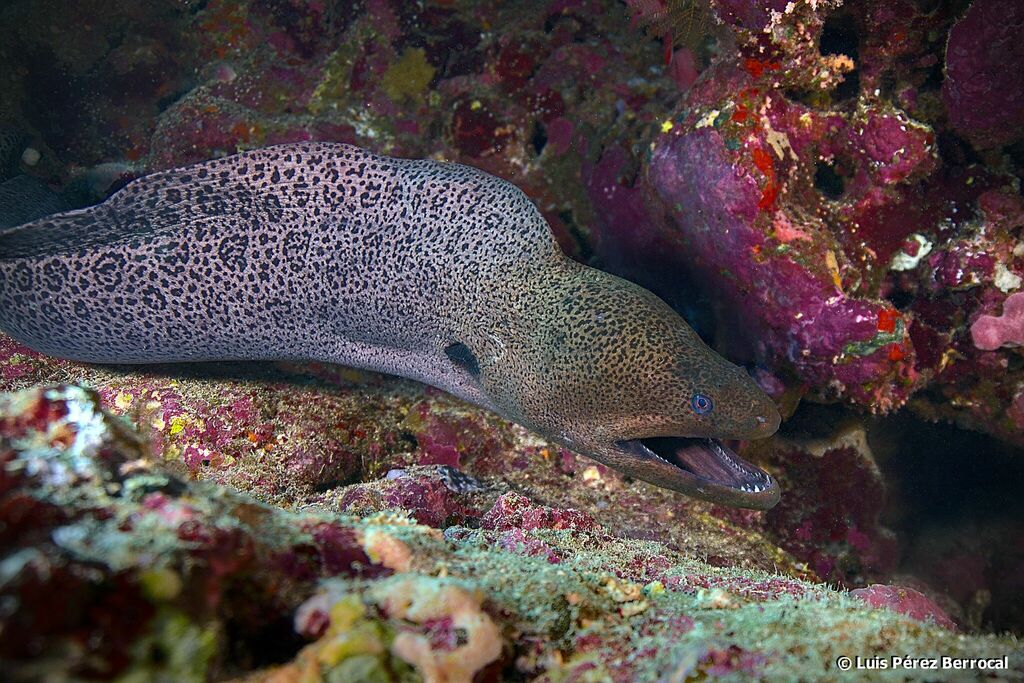
Giant Moray Eel in Mauritius — The Reef's Apex Ambush Predator
The giant moray eel (Gymnothorax javanicus), known in French as the murène géante, is the largest moray eel species on the planet and one of the most captivating marine animals you can encounter while diving in Mauritius. A common resident of the island's coral reefs, lagoons, and outer reef walls, this formidable predator has earned legendary status among divers and underwater photographers worldwide.
Identification and Physical Characteristics
Adult giant morays can reach an impressive 3 metres in length and weigh up to 30 kilograms, making them impossible to miss on a reef dive. Their bodies are thick, muscular, and mottled with a distinctive brownish-yellow coloration overlaid with dark leopard-like spots, providing excellent camouflage among coral heads and rocky outcroppings. One of their most striking features is their constantly opening and closing mouth — not a sign of aggression, but simply the way they pump water over their gills to breathe. Their small, circular eyes and the characteristic bump on their forehead just above the snout help distinguish them from other moray species found in Mauritius.
Behaviour and Diet
Giant morays are primarily nocturnal hunters, spending their days resting with their heads poking out from coral caves and crevices. They are ambush predators, relying on stealth and surprise rather than speed to catch prey. Their diet consists mainly of fish, octopus, squid, and crustaceans. Fascinatingly, giant morays possess a unique adaptation shared with few other animals — a second set of jaws called pharyngeal jaws, which move forward into the mouth to help grip and pull struggling prey down the throat, a mechanism made famous by the Alien films.
In Mauritius, it is not uncommon to observe giant morays leaving their dens at dusk to hunt actively across the reef. Some experienced local dive guides have even witnessed the remarkable cooperative hunting behaviour between giant morays and groupers — a rare interspecies alliance documented by scientists in recent years.
Where to See Giant Moray Eels in Mauritius
Giant morays are common throughout Mauritian waters and can be found at most reef dive sites around the island. They favour complex coral structures with plenty of cavities and overhangs, making the island's outer reef slopes and underwater plateaus ideal habitats. Drop-offs and walls in the south and east of Mauritius are particularly productive hunting grounds, where the combination of deep water and rich coral growth supports healthy populations. Night dives dramatically increase your chances of observing active hunting behaviour.
Interaction and Safety
Despite their intimidating appearance, giant morays are not aggressive toward divers unless provoked or threatened. The key to a safe and rewarding encounter is to maintain a respectful distance, avoid reaching into crevices, and never attempt to feed them without proper guidance. Bites, while rare, can be serious due to the eel's backward-pointing teeth, which make wounds difficult to clean. Experienced divers in Mauritius often describe relaxed encounters with morays that are accustomed to human presence, sometimes allowing close observation for extended periods.
Ecological Role
As apex predators of the reef, giant morays play a critical role in maintaining ecological balance. By controlling populations of smaller reef fish and invertebrates, they help prevent overgrazing of coral and support biodiversity. The health of moray eel populations is therefore considered a key indicator of overall reef health — making the abundance of giant morays in Mauritius a reassuring sign of the islands' relatively well-preserved marine ecosystems.
Photography Tips
For underwater photographers, the giant moray is a dream subject. Use a wide-angle lens to capture the eel within its reef environment, and approach slowly and from the side rather than head-on. Early morning and late afternoon dives offer the best natural light, while night dives provide dramatic opportunities to capture the eel in full hunting mode. A good dive guide who knows the regular haunts of local morays will be invaluable.