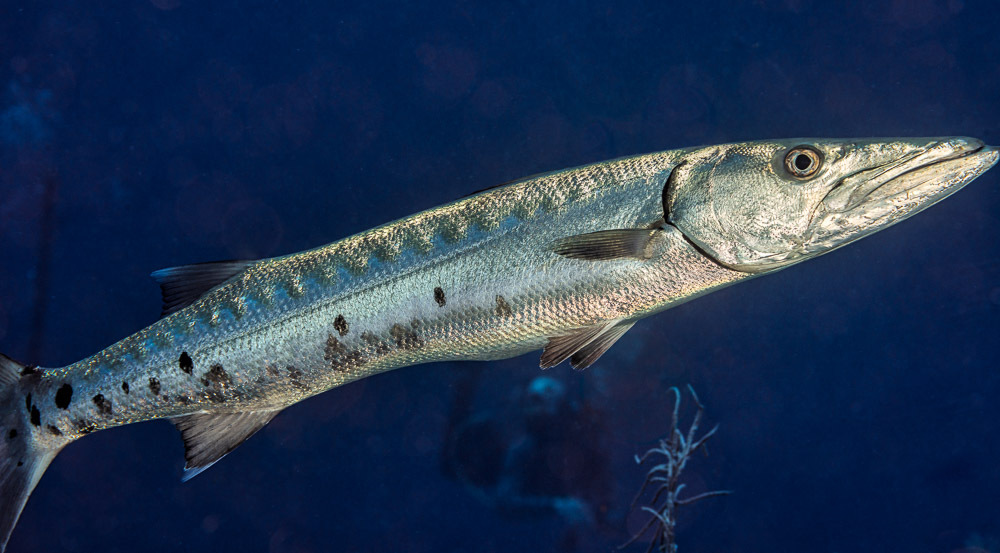
Giant Barracuda in Mauritius — The Silver Predator of the Reef
The Giant Barracuda (Sphyraena barracuda), known locally as the Grand Barracuda, is one of the most iconic large reef fish found in the warm, clear waters surrounding Mauritius. Growing up to an impressive 1.8 metres in length and weighing over 40 kilograms, this sleek, torpedo-shaped predator is instantly recognizable by its silvery flanks, dark blotches along its lower sides, and the distinctive underbite that reveals a formidable set of fang-like teeth. For divers exploring Mauritian reefs, spotting a Giant Barracuda is almost a rite of passage.
Behaviour and Biology
Despite their fearsome appearance, Giant Barracudas are generally not aggressive towards divers unless provoked or attracted by shiny jewellery that mimics the flash of small fish. They are highly visual ambush predators, relying on incredible bursts of speed — up to 55 km/h — to strike prey with surgical precision. Juveniles tend to inhabit sheltered lagoons and mangrove areas, while adults favour the open reef edges, drop-offs, and channels where currents deliver a steady stream of prey such as mullet, grunts, and smaller reef fish.
One of the most captivating behaviours of the Giant Barracuda is its habit of hovering almost perfectly still in the mid-water column, often facing into a gentle current. This allows it to survey its territory with minimal effort, and it is during these moments that divers can approach surprisingly close for extended observations. Solitary adults are the norm in Mauritius, though younger individuals occasionally gather in loose schools around deeper reef structures.
Where to See Giant Barracuda in Mauritius
Giant Barracudas are considered common throughout Mauritius, making them accessible to divers of all experience levels across the island. The outer reef edges and channel passes are particularly productive hunting grounds. Sites on the west coast such as Coin de Mire (Gunner's Quoin) and the reefs around Flic en Flac regularly host large solitary individuals patrolling drop-offs. On the north coast, the underwater topography around Grand Baie provides ideal barracuda habitat. The south and east coasts, with their stronger currents and less-visited reefs, also deliver reliable sightings, particularly around Blue Bay Marine Park.
Snorkelers exploring the shallower lagoon areas may encounter juvenile barracudas, while scuba divers venturing to depths of 15–40 metres along wall dives and reef escarpments stand the best chance of meeting fully grown adults. Early morning dives — when barracudas are most actively hunting — tend to yield the closest and most dynamic encounters.
Giant Barracuda and Local Fisheries
In Mauritius, the Giant Barracuda holds cultural and economic significance as a game fish targeted by both recreational anglers and local fishermen. Its flesh is highly valued, though ciguatera fish poisoning — caused by toxins accumulated through the food chain — has historically been associated with large barracudas from certain reef systems. Local fishermen are well aware of this risk and exercise caution depending on the origin of the catch. This complex relationship between humans and barracuda reflects the broader challenges of sustainable reef fisheries management in the Indian Ocean.
Photography Tips
Photographing a Giant Barracuda in Mauritius requires patience and a calm approach. Avoid making sudden movements or pointing your camera directly like a threat display. A wide-angle lens works beautifully when the fish is hovering nearby, capturing its full silver length against the deep blue backdrop. Backlighting from the surface can create stunning silhouette shots, while a gentle current will keep the barracuda aligned perfectly for portrait-style images. The combination of Mauritius's exceptional water visibility — often exceeding 30 metres — and the barracuda's photogenic profile makes this one of the most rewarding subjects in the island's underwater photography scene.
Conservation
Currently listed as Least Concern by the IUCN, the Giant Barracuda remains relatively abundant in Mauritius. However, ongoing pressure from reef fishing and habitat degradation means that responsible diving practices and marine protected area enforcement remain essential to ensure these magnificent animals continue to thrive in Mauritian waters for generations to come.