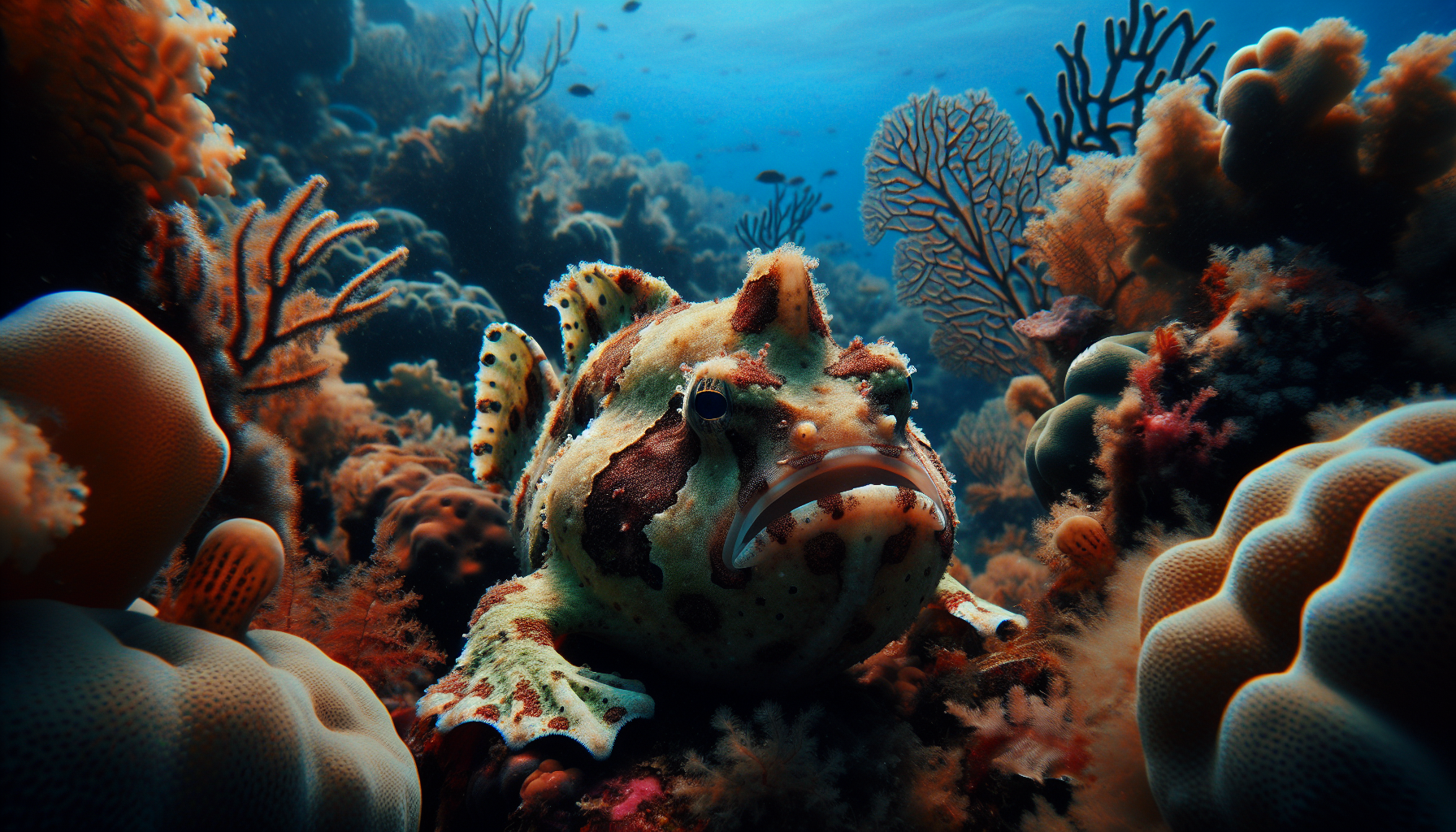
Frogfish in Mauritius: The Ultimate Master of Disguise
Among the many extraordinary marine creatures inhabiting the reefs of Mauritius, few are as captivating – or as cunningly hidden – as the frogfish (Antennarius spp.), known locally as poisson grenouille. These remarkable fish belong to the family Antennariidae and are celebrated worldwide for their extraordinary camouflage, bizarre locomotion, and lightning-fast predatory strikes. For divers and snorkellers visiting Mauritius, encountering a frogfish is considered one of the ultimate reef encounters.
What is a Frogfish?
Frogfish are small to medium-sized ambush predators, typically ranging from 2 to 30 centimetres in length depending on the species. Their body is globular and highly compressed, covered in warty, textured skin that mimics the appearance of sponges, encrusting algae, coral rubble, and even sea anemones. Several species have been recorded in Mauritian waters, including the painted frogfish (Antennarius pictus) and the striped frogfish (Antennarius striatus), with colour morphs ranging from vivid yellow and orange to mottled brown, black, and white.
One of the frogfish's most iconic features is its illicium – a modified dorsal spine on its head that acts as a fishing rod, tipped with a fleshy lure called the esca. The frogfish wiggles this lure to attract curious fish and crustaceans directly to its enormous, upward-facing mouth. When prey ventures close enough, the frogfish strikes in less than 6 milliseconds – one of the fastest predatory strikes in the animal kingdom.
Behaviour and Ecology
Frogfish are solitary, sedentary animals that spend most of their lives anchored to a single sponge, coral head, or rocky outcrop. Rather than swimming in the conventional sense, they use their pectoral fins as limb-like appendages to 'walk' along the reef – a behaviour that is both endearing and otherworldly to observe. They are also capable of jet propulsion, expelling water through small gill openings to burst forward in short, rapid movements.
These fish are highly territorial and voraciously carnivorous. They are capable of consuming prey nearly as large as themselves, thanks to an expandable stomach. Cannibalism between frogfish is not uncommon, making encounters with mating pairs particularly dramatic.
Spotting Frogfish in Mauritius
Frogfish are considered common in Mauritius, though their extraordinary camouflage means they are consistently overlooked by less experienced eyes. The island's diverse reef ecosystems – from shallow lagoon walls to deeper outer reef slopes – provide ideal habitat. They are most frequently found resting motionless on colourful sponges, particularly in areas with rich invertebrate growth.
The key to finding frogfish is slow, methodical diving. Scan sponges and coral rubble carefully, looking for anything that seems slightly 'wrong' – an unusual texture, a mismatched colour patch, or a suspiciously round shape. A knowledgeable local dive guide is invaluable, as experienced guides often know the exact sponge where a particular frogfish has been sitting for weeks.
Photography Tips
Frogfish are a macro photographer's dream. Their immobility makes them patient subjects, and their extraordinary textures reward close-up and super-macro shooting. Use a wide aperture to isolate the subject against the reef background, and approach slowly to avoid startling them. Many dive centres in Mauritius offer dedicated critter and macro dives specifically targeting frogfish and other cryptic species.
Conservation
Frogfish in Mauritius are not currently subject to targeted fishing pressure, and their cryptic nature offers them natural protection. However, like all reef species, they are vulnerable to habitat degradation from coral bleaching, anchor damage, and water quality decline. Responsible diving practices – no touching, no disturbing – are essential to protecting these remarkable animals and their reef habitat for future generations of divers to enjoy.