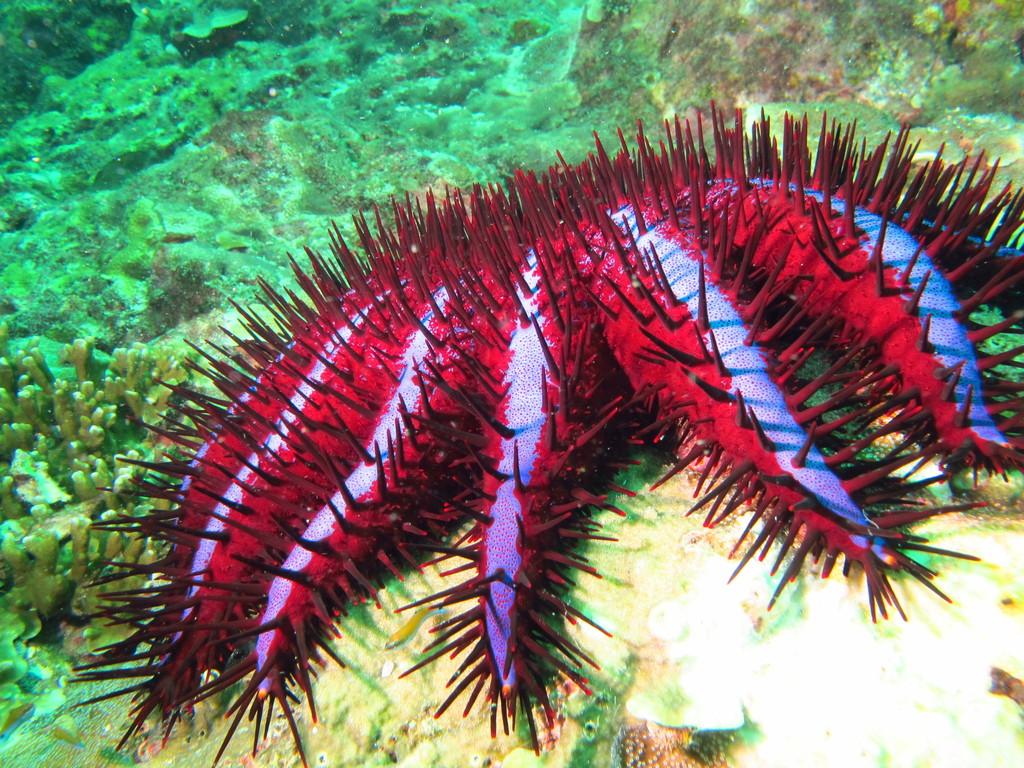
Crown-of-Thorns Starfish in Mauritius: A Reef Predator Like No Other
The crown-of-thorns starfish (Acanthaster planci), known in French as couronne d'épines, is one of the most recognisable and ecologically significant invertebrates found on the reefs of Mauritius. Reaching up to 40–50 cm in diameter, this large, multi-armed sea star is covered in an intimidating armour of sharp, venomous spines — hence its dramatic common name. It is a member of the phylum Echinodermata and belongs to the family Acanthasteridae, making it a close relative of more benign starfish species found throughout the Indo-Pacific.
Physical Description and Identification
Adult crown-of-thorns starfish are unmistakable in the water. They typically display 13 to 21 arms radiating from a central disc, and their entire upper surface is blanketed with long, sharp spines measuring up to 4–5 cm in length. Colouration varies considerably — in Mauritius, individuals may appear reddish-purple, bluish-grey, or greenish-brown, often with vibrant orange or red spine tips that serve as a warning to potential predators. Their sheer size, alien appearance, and bold colour patterns make them one of the most photographed invertebrates by divers visiting the island.
Behaviour and Feeding Habits
Acanthaster planci is an obligate corallivore, meaning it feeds almost exclusively on coral polyps. The starfish uses its powerful tube feet to haul itself over a coral head, then everts its cardiac stomach directly onto the coral surface, digesting the living tissue and leaving behind a characteristic white, bleached skeleton. A single adult can consume up to 6 square metres of coral per year, making population outbreaks a serious threat to reef health. In Mauritius, periodic outbreaks have been documented on both the northern and western reef systems, requiring coordinated removal efforts by local marine conservation organisations. Despite this, individual starfish remain a natural and important part of the reef ecosystem, helping to control fast-growing coral species and maintain biodiversity.
Ecological Role in Mauritius
The crown-of-thorns plays a complex ecological role on Mauritian reefs. Under normal population densities, it acts as a natural regulator, preferentially consuming dominant coral species and allowing slower-growing, more fragile corals to establish themselves. However, when population densities spike — sometimes driven by excess nutrients from agricultural runoff, overfishing of their natural predators (notably the giant triton snail, Charonia tritonis), and elevated sea surface temperatures — outbreaks can devastate large sections of reef within months. Mauritius's marine park authorities and NGOs such as the Reef Conservation Mauritius actively monitor and manage COTS populations across key reef zones.
Venomous Spines: A Diver's Caution
While the crown-of-thorns is not aggressive, its spines are genuinely hazardous. Each spine is coated in a saponin-based venom that can cause intense pain, swelling, nausea, and in rare cases, more serious reactions if multiple punctures occur. Divers are strongly advised to never touch or handle these animals without proper protective gloves and training. If stung, the wound should be immersed in hot water immediately and medical attention sought if symptoms worsen. Observing from a safe distance is always the recommended approach.
Where and When to See Crown-of-Thorns in Mauritius
Crown-of-thorns starfish are considered common around Mauritius and can be encountered year-round, though they are most frequently observed during night dives or early morning dives when they are most active. They tend to favour the outer reef slopes and coral-rich walls between 5 and 30 metres depth. Popular dive sites on the west coast, such as Flic en Flac and the passes around the northern tip of the island, consistently produce sightings. With an experienced local dive guide, locating a crown-of-thorns starfish is rarely a challenge on Mauritius's vibrant reefs.