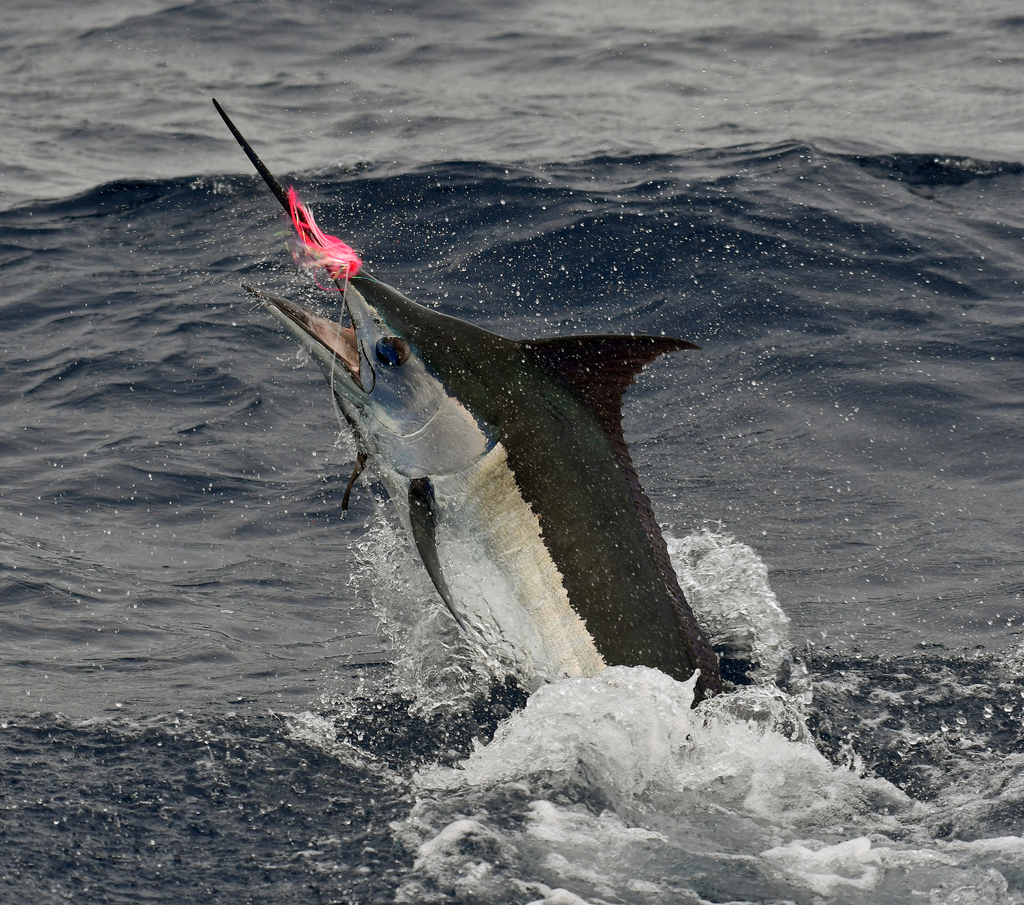
Blue Marlin in Mauritius: The King of the Open Ocean
The blue marlin (Makaira nigricans), known locally as marlin bleu, is one of the most iconic and sought-after pelagic fish on the planet. With its distinctive elongated bill, cobalt-blue flanks, and incredible power, this apex predator represents the pinnacle of ocean sport fishing and wildlife encounters. In Mauritius, the blue marlin holds a place of special cultural and ecological significance, drawing big-game fishing enthusiasts and marine wildlife fans to the island's legendary waters every year.
Physical Characteristics
Blue marlins are among the largest bony fish in the ocean. Adult females — which are significantly larger than males — can reach lengths of up to 4.5 metres and weigh in excess of 500 kg, though the average caught in Mauritius typically ranges between 100 and 300 kg. Their bodies are built for speed: a rigid, spear-like bill, a streamlined muscular frame, and a retractable dorsal fin allow them to hit speeds of up to 80 km/h. Their backs shimmer with brilliant cobalt blue, fading to a silvery-white belly, often marked by pale vertical stripes that fade after death.
Behaviour and Diet
Blue marlins are highly migratory, roaming vast stretches of the open ocean in tropical and subtropical waters worldwide. They are apex predators, feeding primarily on tuna, mackerel, squid, and other large pelagic fish. Their bill is used to stun prey by slashing through schools of fish at high speed. Despite their solitary nature, marlins follow warm ocean currents and areas of upwelling that concentrate baitfish — and the waters around Mauritius, influenced by the warm currents of the Indian Ocean, provide exactly this kind of rich feeding ground.
Blue Marlin in Mauritius
Mauritius has built a global reputation as one of the finest blue marlin destinations in the Indian Ocean. The island sits adjacent to the Mascarene Plateau, where the ocean floor drops dramatically from shallow reef to depths exceeding 3,000 metres within just a few miles of the coast. These steep underwater slopes concentrate nutrients and baitfish, creating a perfect corridor for patrolling marlins.
The southwestern coast around Black River (Rivière Noire) is considered the epicentre of blue marlin activity in Mauritius. The famous Black River Canyon — a vast underwater trench plunging into the abyss — is where most encounters take place. The Albion and Flic en Flac offshore zones also produce marlin sightings, along with the deeper waters off the northern tip of the island near Coin de Mire.
How to See Blue Marlin in Mauritius
Unlike reef fish, blue marlins are not encountered on scuba dives. The primary way to experience them is through big-game fishing charters, where trolling with large lures or live bait in deep offshore waters is the standard technique. Many operators offer tag-and-release programmes, helping to protect the population while still offering the thrill of the catch. For those who prefer a non-fishing encounter, blue marlins are occasionally spotted from boats during whale and dolphin watching excursions in deep water channels.
Conservation and Responsible Encounters
The blue marlin is classified as Vulnerable on the IUCN Red List, with populations under pressure from commercial longline fishing and sport fishing pressure globally. In Mauritius, responsible operators are increasingly adopting catch-and-release practices, and local fishing tournaments now encourage tagging programmes in partnership with international research bodies. Choosing operators who prioritise sustainable, low-impact fishing is essential for ensuring that future generations can continue to witness this magnificent species in Mauritian waters.
Why Mauritius Stands Out
Few places in the world combine such easy access to extreme ocean depths with the comfort and infrastructure of a world-class island destination. Mauritius consistently ranks among the top blue marlin fishing destinations globally, with its season aligning with the peak migration patterns of Indian Ocean marlin populations. Whether you're a seasoned angler or simply an ocean lover, the presence of blue marlin in Mauritian waters is a reminder of the extraordinary marine wilderness that lies just beyond the coral reef.