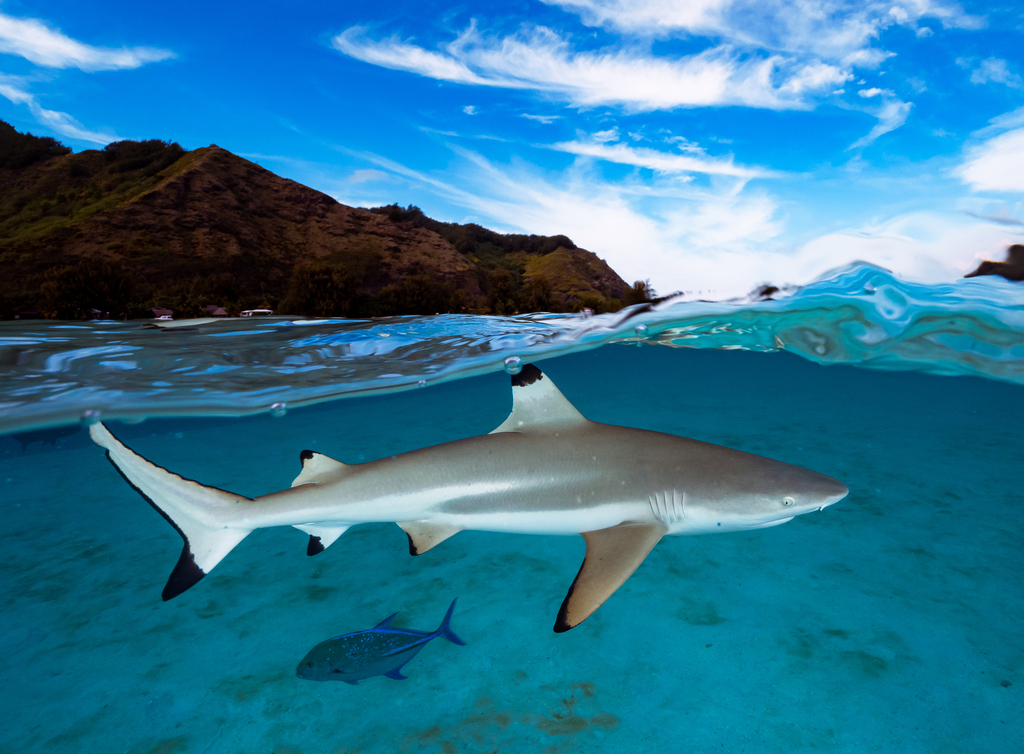
Blacktip Reef Shark in Mauritius
The blacktip reef shark (Carcharhinus melanopterus), known locally as requin à pointes noires, is one of the most frequently encountered sharks in Mauritius. Sleek, swift, and strikingly marked, this species is instantly recognisable by the bold black tips on all of its fins — a natural contrast against its grey-brown body and white underside. Adults typically reach between 1.5 and 1.8 metres in length, making them a manageable and non-threatening presence for most divers and snorkellers.
Habitat and Behaviour Around Mauritius
Blacktip reef sharks are quintessential inhabitants of shallow coastal environments. Around Mauritius, they favour the fringing coral reefs, lagoons, and reef passes that ring the island's coastline. These sharks are most active during the day, often patrolling reef edges at depths between 1 and 30 metres. They are highly adapted to warm, tropical waters and are frequently spotted in the shallows — sometimes in water barely deep enough to cover their dorsal fins.
Despite their fearsome reputation, blacktip reef sharks are generally shy and cautious around humans. They tend to circle at a distance before approaching, and will typically retreat if a diver moves toward them. Their diet consists mainly of small reef fish, octopus, squid, and crustaceans. They play a vital ecological role as mid-level predators, helping to maintain the balance of reef ecosystems by controlling fish populations.
Diving and Snorkelling with Blacktip Reef Sharks
Mauritius offers some of the best opportunities in the Indian Ocean to encounter blacktip reef sharks in their natural environment. Several well-known dive sites around the island, particularly along the western and northern coasts, provide reliable sightings year-round. Many experienced dive operators on the island include shark-watching as part of their guided reef dives, giving participants the chance to observe these animals responsibly and safely.
Snorkellers also have an excellent chance of encountering blacktips in the island's lagoons, especially in the early morning when sharks are most active near the surface. Blue Bay Marine Park in the south-east and the reefs off Flic en Flac on the west coast are particularly popular spots. Always maintain a calm, respectful distance — erratic movements or attempts to touch sharks can cause stress to the animal and potentially provoke a defensive response.
Conservation Status and Threats
The blacktip reef shark is currently classified as Vulnerable on the IUCN Red List. Globally, populations have declined due to overfishing, habitat degradation, and the shark fin trade. In Mauritius, the species benefits from the protection offered by marine parks such as Blue Bay, but faces ongoing pressures from coastal development, reef degradation, and occasional targeted fishing.
Mauritius has taken steps toward marine conservation, and responsible ecotourism centred on shark encounters is increasingly recognised as a valuable tool for highlighting the economic worth of living sharks versus harvested ones. Divers visiting Mauritius can support conservation efforts by choosing eco-certified dive operators, never handling or feeding sharks, and reporting any illegal fishing activity to local authorities.
Tips for the Best Encounter
- Dive early: Blacktip reef sharks are most active in the early morning hours.
- Stay calm and slow: Sudden movements will cause sharks to retreat — slow, deliberate finning gives you longer observation time.
- Avoid bright jewellery: Reflective objects can attract unwanted attention from inquisitive sharks.
- Go with a guide: Local dive guides know exactly where to find blacktips and how to approach them safely.
- Bring an underwater camera: The contrast of black-tipped fins against vivid coral makes for stunning photography.
The blacktip reef shark is a treasure of Mauritius's marine world — a living symbol of healthy, functioning reef ecosystems. Every respectful encounter is a reminder of why these waters deserve protection for generations to come.