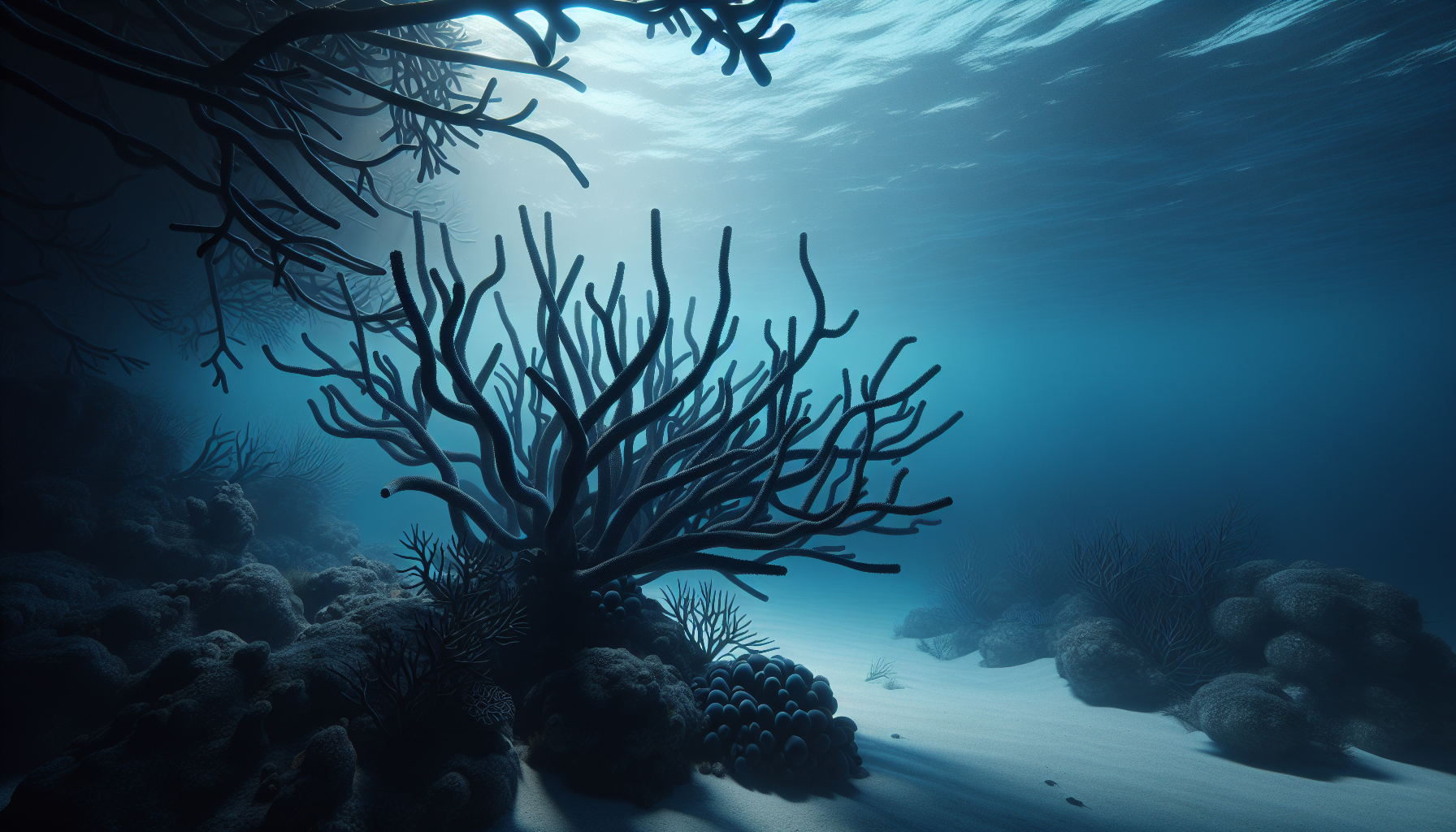
Black Coral (Corail Noir) in Mauritius — Antipathes spp.
An Ancient Jewel of the Deep
Black coral, known locally as Corail noir and scientifically classified under the genus Antipathes, is one of the most enigmatic and biologically significant organisms found in Mauritian waters. Despite the name, living black coral is rarely black in appearance — its delicate polyps and branches often display vibrant hues of white, yellow, orange, and red, while the skeleton beneath is the deep, lustrous black that gives the species its common name. These are not true reef-building corals; they belong to the order Antipatharia, a group of ancient cnidarians that thrive in deeper, cooler waters beyond the reach of most recreational divers.
Biology and Characteristics
Black corals are colonial organisms, meaning each colony is composed of thousands of tiny individual polyps working in unison. Unlike shallow-water stony corals, Antipathes spp. do not rely on photosynthetic algae (zooxanthellae) for energy. Instead, they are suspension feeders, capturing plankton and organic particles drifting through the water column. This adaptation allows them to flourish in the dim, nutrient-rich depths where sunlight cannot penetrate. Their branching, tree-like or whip-like structures can grow remarkably slowly — some colonies are estimated to be hundreds, even thousands of years old, making them among the longest-lived marine animals on Earth.
In Mauritius, black coral colonies are typically found at depths ranging from 30 to over 60 metres, anchoring themselves to rocky substrates, steep drop-offs, and underwater walls. Their skeletal architecture creates vital microhabitats, providing shelter for hawkfish, gobies, shrimps, and a host of other small invertebrates seeking refuge from predators.
Distribution and Rarity in Mauritius
The presence of black coral in Mauritius is considered rare and localised. The island's dramatic underwater topography — featuring plunging walls, volcanic ridges, and deep channels — provides ideal anchor points for these colonies. However, their preference for depth, combined with the pressures of historical harvesting for jewellery and the ornamental trade, has made them increasingly scarce. Responsible dive operators and local marine conservation groups have become vital allies in monitoring known black coral sites and educating divers about the importance of a strict no-touch policy.
Ecological Importance
Far from being simple decorations of the seabed, black coral colonies function as essential ecosystem engineers. Their complex branching structures increase local biodiversity by creating three-dimensional habitat in otherwise featureless deep-water zones. Research conducted across the Indo-Pacific has demonstrated that black coral gardens support significantly higher densities of fish and invertebrates compared to surrounding bare substrate. In this sense, even a single ancient colony in Mauritius may support an entire community of dependent species.
Conservation Status and Threats
Black corals are listed under CITES Appendix II, meaning international trade is regulated to prevent unsustainable exploitation. In Mauritius, they are protected under national fisheries and environmental legislation. Despite legal protections, black corals face ongoing threats including illegal collection, deep-water trawling, anchor damage, and the broader impacts of climate change, which is altering deep-water temperature profiles and ocean chemistry. Divers are strongly urged to maintain buoyancy control, avoid contact with colonies, and report any sightings to local marine park authorities.
How to See Black Coral in Mauritius
Encountering black coral requires advanced open-water or technical diving certification, given the depths involved. The best strategy is to dive with experienced local guides who know the specific sites and depths where colonies have been documented. Dawn and dusk dives can offer the most rewarding encounters, as the polyps extend fully to feed during periods of plankton activity. Always prioritise safety, respect depth limits, and allow ample time for decompression stops. Photographing these colonies without touching them is the most meaningful way to document and celebrate their existence.
Why Black Coral Matters
In Mauritius's rich marine tapestry, black coral represents resilience, longevity, and the profound complexity of deep ocean ecosystems. Protecting these slow-growing, irreplaceable organisms is not only a matter of environmental ethics — it is an investment in the biodiversity, tourism potential, and ecological health of Mauritius's seas for generations to come.