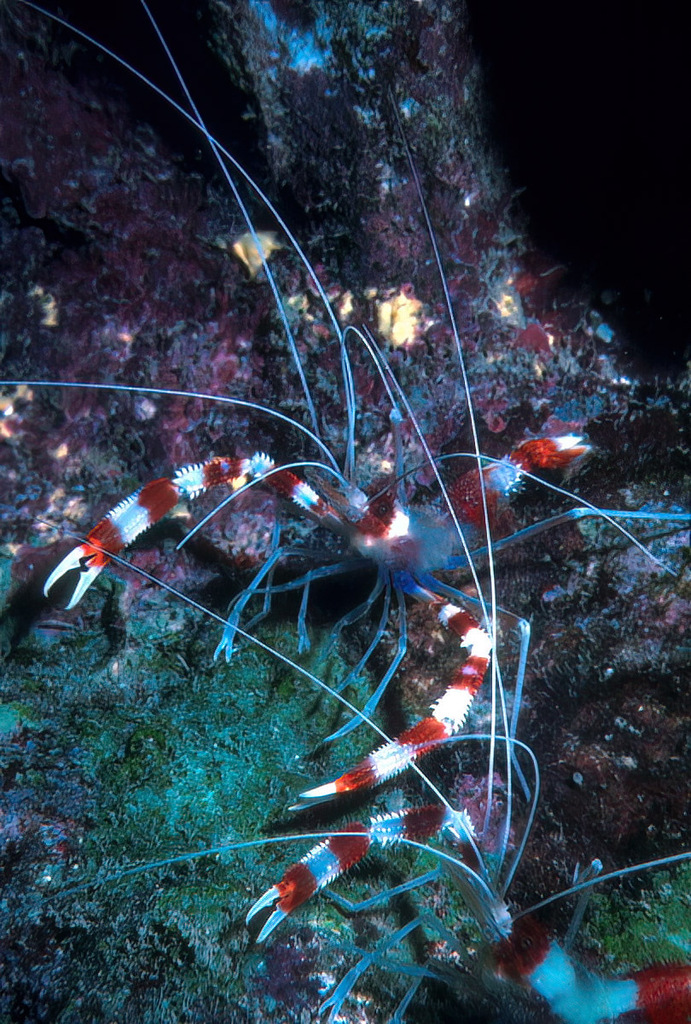
Banded Cleaner Shrimp in Mauritius — Stenopus hispidus
The banded cleaner shrimp (Stenopus hispidus), known in French as the crevette nettoyeuse, is a jewel of Mauritius's coral reef ecosystem. Instantly recognisable by its vivid crimson and white banding, translucent claws, and spectacular white antennae that can extend twice the length of its body, this small crustacean rarely exceeds 6 cm in length yet commands enormous attention from divers and marine life alike.
Appearance and Identification
The banded cleaner shrimp's colouration is unmistakable: bold red or deep scarlet bands alternate with bright white across its carapace, abdomen, and legs. Its three pairs of walking legs are delicately striped, and its oversized chelipeds (claws) are tipped in white. The long, feathery antennae — pure white and constantly in motion — serve as the shrimp's primary advertisement to potential fish clients that a cleaning station is open for business. Juveniles display a similar pattern but are almost completely transparent, making them particularly difficult to spot.
Behaviour and Cleaning Stations
What makes Stenopus hispidus truly remarkable is its role as a professional cleaner on the reef. These shrimp establish cleaning stations in sheltered coral overhangs, beneath ledges, or within sea anemone clusters, where they wave their antennae vigorously to attract fish clients. Wrasses, parrotfish, moray eels, and even large groupers will approach the station, adopt a passive posture, and allow the shrimp to meticulously pick off ectoparasites, dead scales, and food debris — even entering the mouth and gill cavities of larger fish without being eaten.
Banded cleaner shrimp are almost always found in monogamous pairs, a rare trait among crustaceans. A bonded male and female will share the same cleaning station territory for extended periods, and the female moults periodically before carrying translucent eggs beneath her abdomen. This pair-bonding behaviour makes observing them even more rewarding for divers who return to the same site repeatedly.
Habitat in Mauritius
In Mauritian waters, banded cleaner shrimp are considered common and can be found across the island's fringing reef systems, lagoons, and outer reef walls. They favour depths ranging from 1 metre in shallow lagoons to over 30 metres on deeper reef slopes. Look for them in shaded overhangs, beneath table corals, inside coral bommies, and around the base of sea fans. The warm, clear waters of Mauritius — with visibility often exceeding 20 metres — make spotting their waving antennae surprisingly straightforward once you know where to look.
Ecological Importance
Cleaning stations run by Stenopus hispidus play a measurable role in reef health. By removing parasites from fish, they reduce disease transmission across fish populations and contribute to the overall biodiversity and resilience of coral reef ecosystems. Their presence is often used as an indicator of a healthy, undisturbed reef environment. In Mauritius, where marine conservation efforts have intensified in recent decades, the abundance of banded cleaner shrimp is an encouraging sign of reef vitality.
Tips for Divers and Snorkellers
Observing banded cleaner shrimp requires patience and a slow approach. Hovering quietly near a coral overhang and watching for the wave of long white antennae is the most reliable method. Avoid touching the coral or disturbing the surrounding structure, as the shrimp will retreat deep into crevices at the slightest vibration. Macro photographers will find them ideal subjects — their vivid colours and relatively stationary behaviour make for striking images, especially when a fish client is present at the cleaning station. Night dives in Mauritius often reveal the shrimp more actively foraging outside their shelters, offering a different perspective on their behaviour.
Whether you are a first-time snorkeller exploring the Blue Bay Marine Park lagoon or an experienced diver on the outer walls of Coin de Mire, the banded cleaner shrimp is one of Mauritius's most rewarding and accessible reef encounters.